



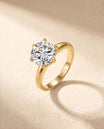
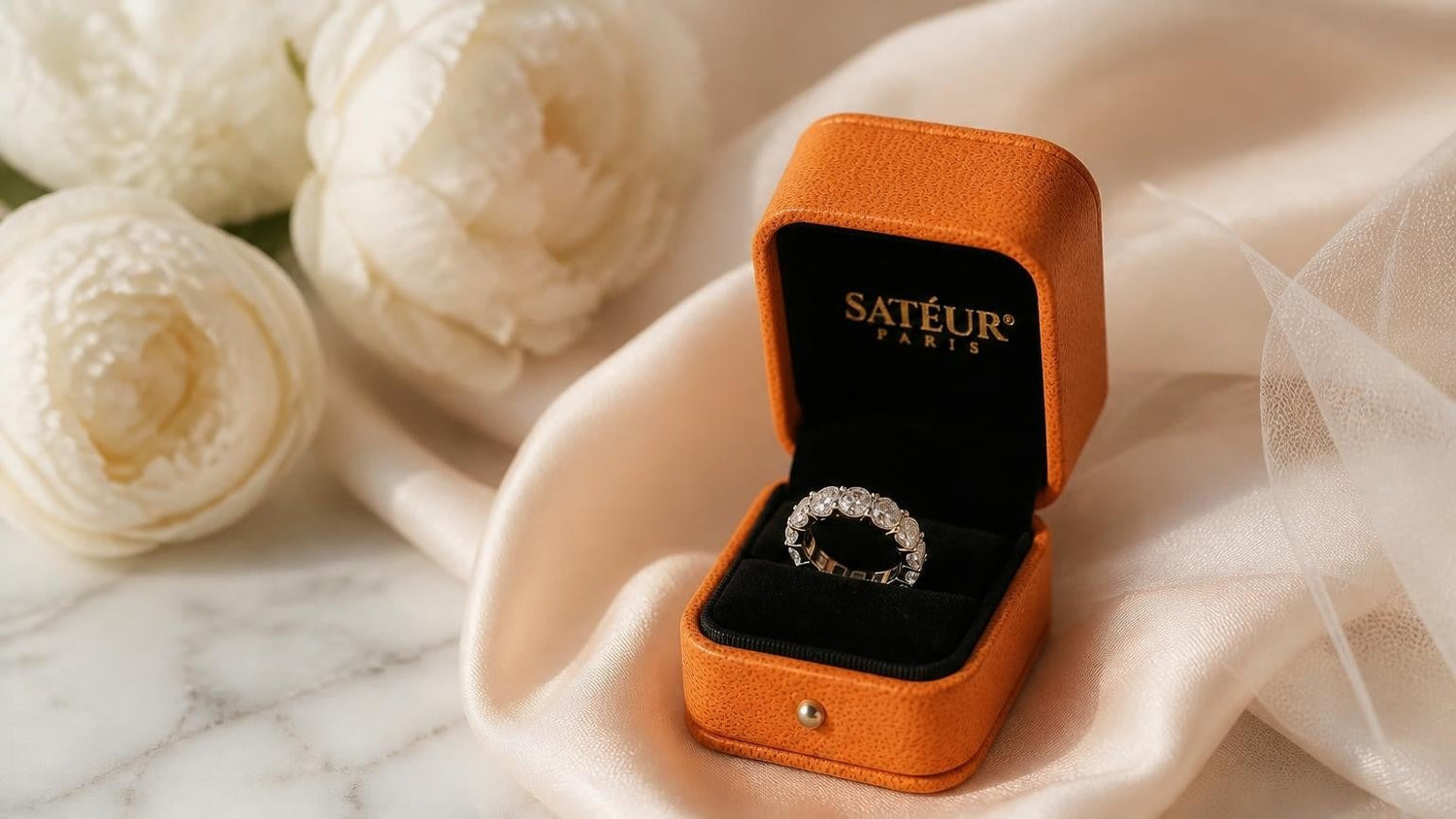
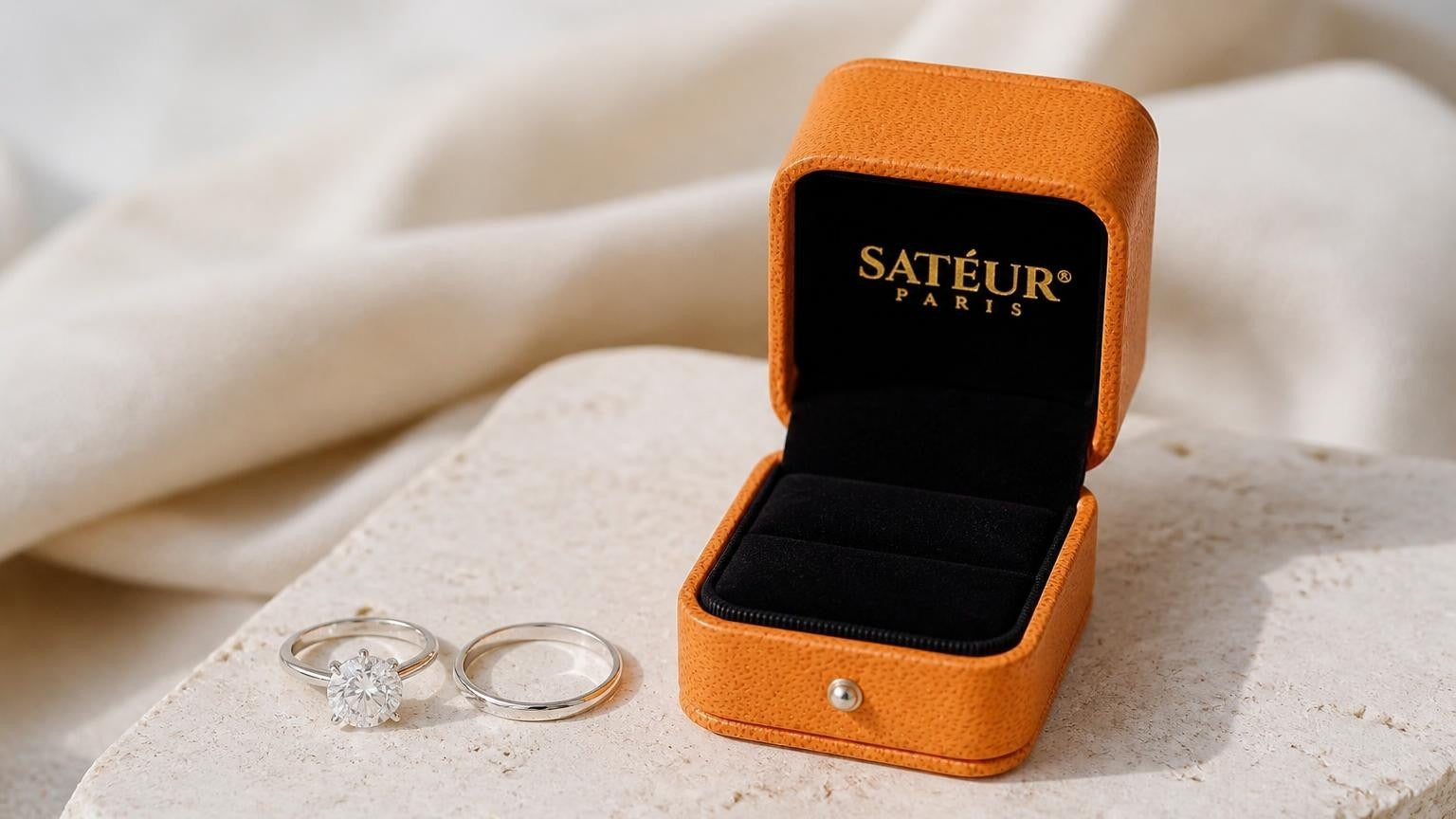
A wedding band is the one ring you'll wear every single day for the rest of your life — so fit, comfort and durability matter as much as how it looks. The choices come down to metal, width, and whether you want a plain band or one set with diamond-look gems. A diamond eternity band runs into the thousands; a Satéur Tout Autour 1874 Ring™ rings the finger in that same continuous brilliance for about 1% of the price, from $138, set in real 18K gold finishing.
This is the complete guide to choosing a wedding band — what it means and how to wear it, which metal suits your hand and lifestyle, how to pick a width and style, the difference between plain and detailed designs, and how diamond-look gems add brilliance for a fraction of the cost. Each section links to a deeper guide or collection where one exists.
Key Takeaways
- A wedding band is the ring you'll wear every day for life, so fit, comfort and durability matter as much as looks.
- Band widths run from 2 mm (subtle) to 8 mm+ (statement); most people land at 4–6 mm.
- Satéur bands are set in 18K gold finishing — white, yellow or rose — for the look and feel of fine gold without the four-figure markup.
- A diamond-look eternity band like the Satéur Tout Autour 1874 Ring™ rings the finger in continuous brilliance for about 1% of a mined-diamond band's price, from $138.
- Satéur Gems® grade to a D–E colour equivalent with an Excellent cut and carry the restrained, white brilliance of a fine diamond — extremely durable and built for a lifetime of daily wear.
- Choose a plain band for understated, a textured or stone-set band for detail — and match the width to your hand and lifestyle.
What a Wedding Band Means — and How to Wear It
What is a wedding band, and which finger does it go on? The wedding band is the simple ring exchanged at the ceremony — the symbol of the commitment itself, traditionally a continuous circle with no beginning or end. In most Western traditions it's worn on the fourth finger of the left hand, the so-called "ring finger," and sits closest to the hand, beneath the engagement ring. Couples often wear matching or complementary bands, and many brides wear the wedding band and engagement ring together as a set.
Because it's worn permanently — through work, sleep, washing up and everything else — the wedding band is the most practical ring decision you'll make. That's why comfort-fit profiles (gently rounded on the inside), durable metals and hard-wearing gems matter more here than on any other piece. Get the everyday-wearability right, and the band quietly does its job for decades.

Choosing Your Metal
Which metal is best for a wedding band? Metal decides the colour, the feel and the upkeep. Gold is the most traditional choice — Satéur bands use 18K gold finishing, in white gold (cool and bright, the most diamond-like backdrop), warm yellow gold (classic and timeless) and rose gold (romantic and modern). Platinum is the heaviest, coolest and most understated, prized for everyday durability. The right metal is usually the one that matches the engagement ring it sits beside, and the tones you already wear.
For couples, metal is also where personality shows: matching metals read classic and unified, while mixed metals (her rose gold, his white gold) feel modern and individual. Whatever you choose, 18K gold finishing gives the look and weight of fine gold across all three tones — so you can pick by colour and lifestyle rather than by price.

Explore in depth:
Band Width, Style & Matching Your Ring
How wide should a wedding band be, and how do you match it to the engagement ring? Width changes the whole character of the ring. Bands run from a delicate 2 mm up to a bold 8 mm or more, and most people land at 4–6 mm — present without being heavy. A slimmer band reads dainty and stacks well beneath an engagement ring; a wider band makes more of a statement. As a rule, the wider the band, the snugger it feels, so a wide band often needs a half-size up.
Matching the band to the engagement ring is the other half of the decision, and it depends on the centre shape. A plain or slightly curved (contoured) band sits flush against a solitaire; a band that nests around a halo or an angular cut — emerald, radiant, pear, oval — may need a contour or a gap to lie flush. A plain band lets a detailed engagement ring lead; a band that echoes its metalwork ties the set together. The deeper guides below cover the right band for each engagement-ring shape.

Explore in depth:
Plain, Textured or Diamond-Look Bands
Should you add gems to a wedding band? It depends on how much everyday brilliance you want. A plain band lets the engagement ring lead. A half-eternity band sets gems across the top half for brilliance that still sits comfortably against the finger. A full-eternity band — like the Satéur Tout Autour 1874 Ring™, whose name means "all around" — rings the entire finger in continuous light, the most luxurious look of all.
In mined diamonds, a full-eternity band is a serious investment, which is exactly why the diamond-look version has become so popular. Satéur Gems® bring a D–E colour equivalent, an Excellent cut and the restrained, white brilliance of a fine diamond to a wedding band — set in 18K gold finishing, extremely durable for permanent daily wear, and at about 1% of a diamond band's price. You get the unbroken circle of light without keeping it for special occasions.

Browse Satéur Wedding Bands & Sets
Ready to find your band? Start with the look — a plain band, a textured design, or a diamond-look eternity ring — then narrow by metal and width, and consider a matching engagement-and-wedding set if you're choosing for two. Below you'll find every Satéur wedding-band and bridal-set style and guide, each one a step closer to the ring you'll wear for the rest of your life.

Explore in depth:
The Satéur Gems® Value for Wedding Bands
Why choose a diamond-look band? Because a wedding band is worn every day, forever — and that's exactly the piece you want to be able to relax about. A diamond eternity band runs into the thousands and often ends up reserved for best; a Satéur Gems® band replicates the same flawless-diamond brilliance from $138, set in real 18K gold finishing, extremely durable enough to live in.
That's the New Diamond Standard®: D–E colour, Excellent cut, the restrained white brilliance of a fine diamond, and the durability to shrug off daily life — at about 1% of the mined-diamond price. Across a dinner table, you'd never know the difference. For the one ring you'll never take off, that combination of beauty, toughness and value is hard to beat — and it leaves more for the honeymoon.


Satéur Tout Autour 1874 Ring™
A diamond-look eternity band in 18K gold finishing — the unbroken circle of light.
Compare to a $10,000 mined diamond
Joined by 100,000+ couples across 150+ countries.
Discover Satéur Wedding BandsFree worldwide shipping · 30-day returns · Lifetime Satéur Care
Frequently Asked Questions
What is the significance of a wedding band?
The wedding band is the ring exchanged at the ceremony and worn permanently afterward — a continuous circle symbolising commitment with no beginning or end. Unlike the engagement ring, it represents the marriage itself, which is why couples often choose matching or complementary bands and wear them every day for life.
On which hand or finger should you wear a wedding band?
In most Western traditions, the wedding band is worn on the fourth finger of the left hand — the "ring finger" — and sits closest to the hand, beneath the engagement ring, so the band stays nearest the heart. Many brides wear the two together as a set.
What are the main metal options for wedding bands?
The main choices are gold and platinum. Satéur bands use 18K gold finishing in white gold (cool and bright), yellow gold (classic) and rose gold (romantic). Platinum is the heaviest and most understated. Most people match the band's metal to their engagement ring and the tones they already wear.
Should I choose a plain band or one with texture and detail?
A plain, polished band is the timeless default and lets the engagement ring lead. A textured band (milgrain, brushed, engraved) adds character, and a gem-set or eternity band brings everyday brilliance. Choose by how much detail you want against your engagement ring and your daily routine.
Which band width suits my lifestyle and hand shape best?
Widths run from 2 mm to 8 mm+, and most people land at 4–6 mm. Slimmer bands read dainty and stack well; wider bands make a statement and suit larger hands. Wider bands feel snugger, so they often need a half-size up. If you work with your hands, a comfortable mid-width band in a durable finish wears best.
Can you add stones or diamond-look accents to a plain wedding band?
Yes. A half-eternity band sets gems across the top for brilliance that sits comfortably, while a full-eternity band rings the whole finger in continuous light. The Satéur Tout Autour 1874 Ring™ is a diamond-look eternity band set with Satéur Gems® (D–E colour, Excellent cut, the restrained white brilliance of a fine diamond) in 18K gold finishing — the unbroken circle of light for about 1% of a diamond band's price.
















Hinterlasse einen Kommentar
Diese Website ist durch hCaptcha geschützt und es gelten die allgemeinen Geschäftsbedingungen und Datenschutzbestimmungen von hCaptcha.