



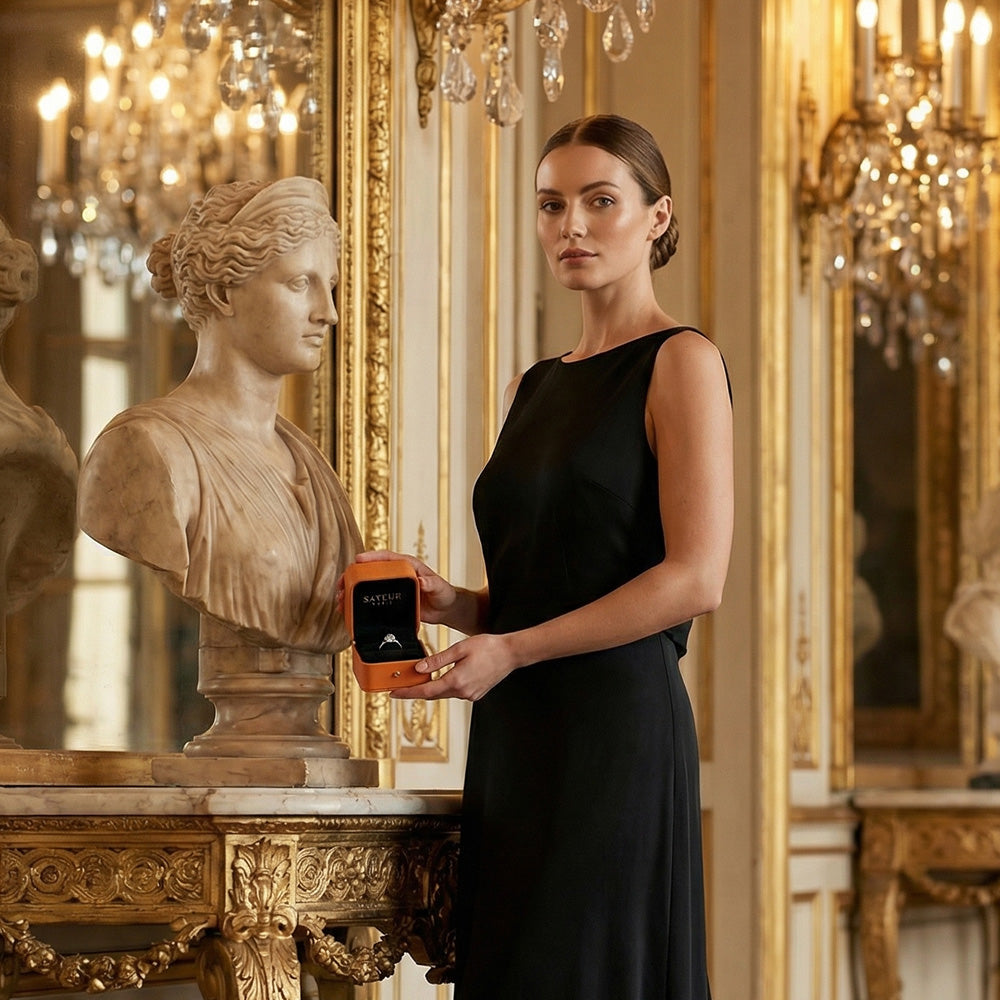
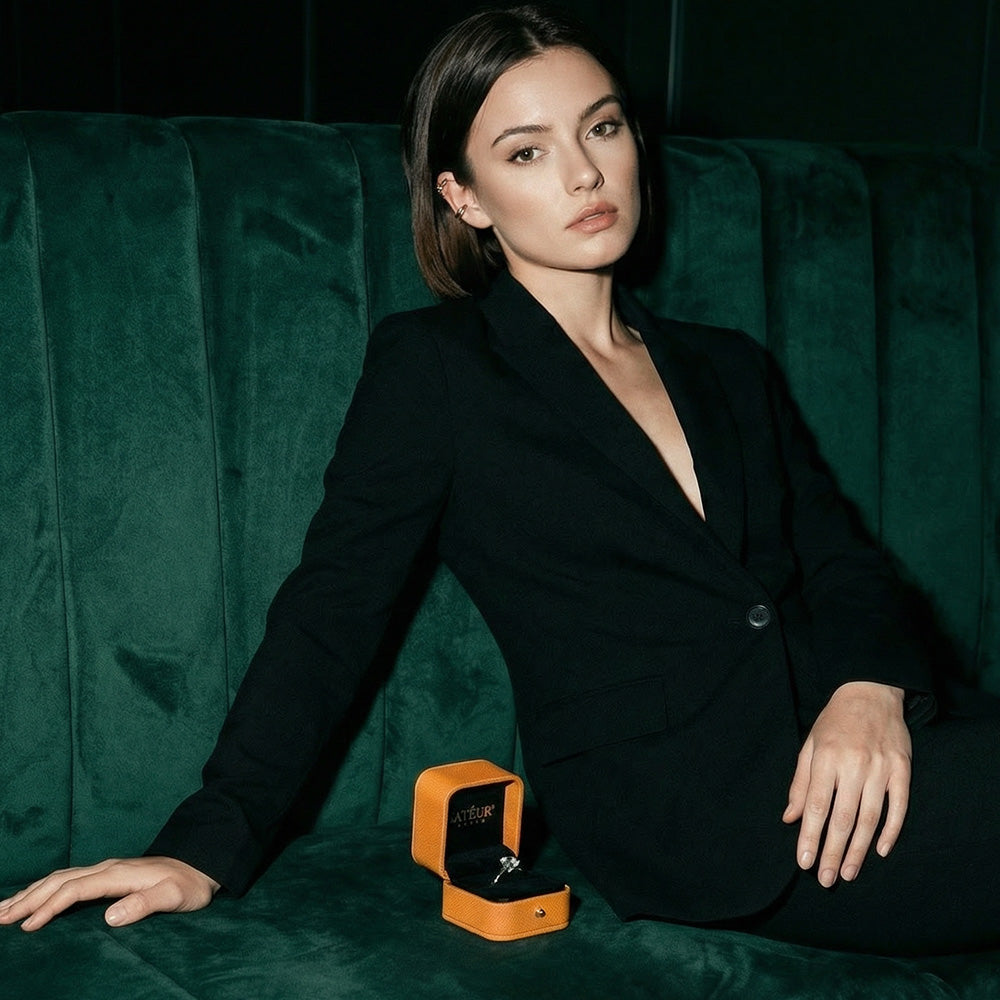
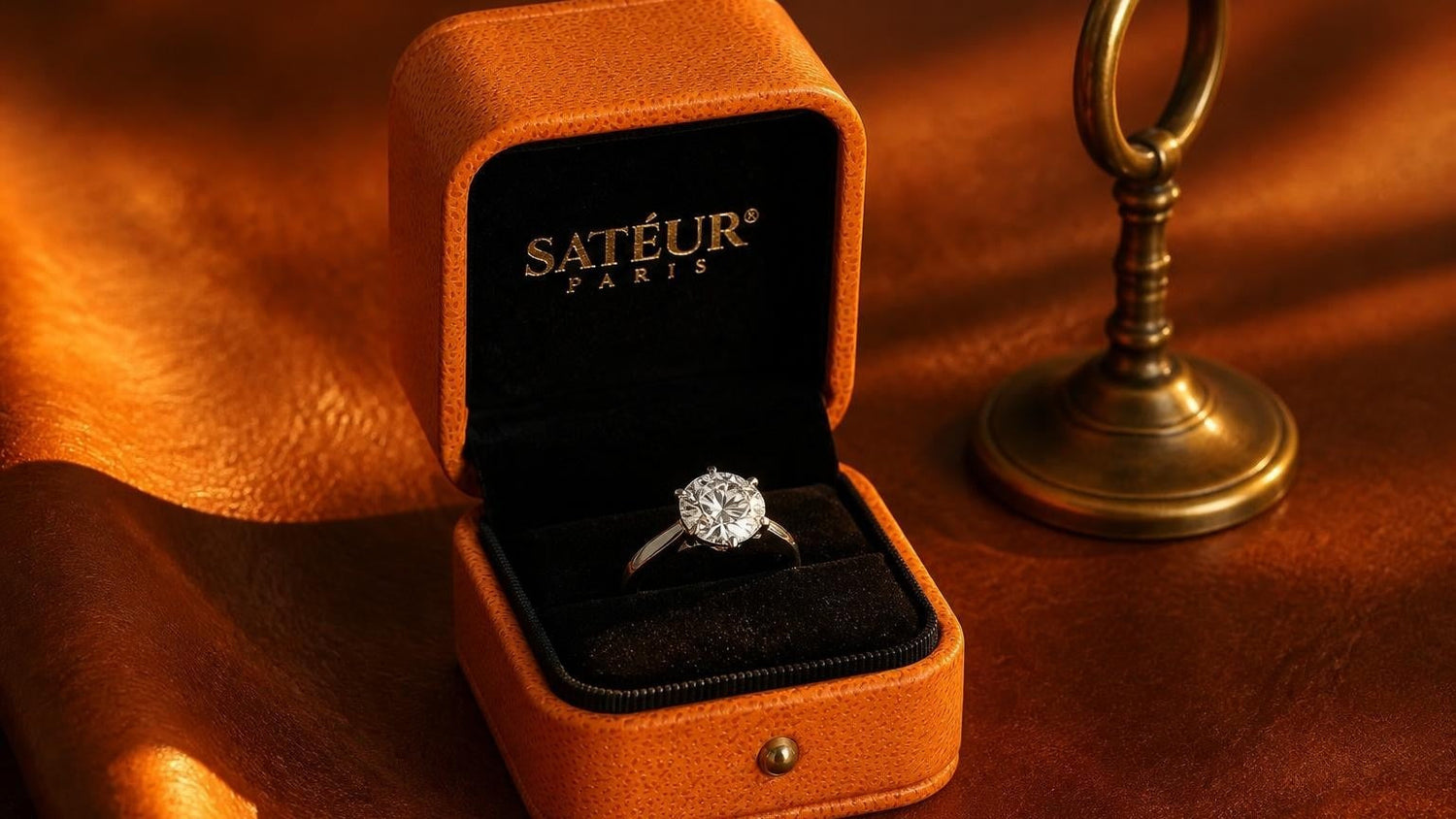
Moissanite fake diamonds — that framing misnames what moissanite actually is. Moissanite is a distinct lab-created gemstone: silicon carbide with a Mohs hardness of 9.25 on the Mohs scale, a refractive index of 2.65–2.69, and approximately 2.4 times the fire of diamond. It is an intentional choice with its own optical identity, openly disclosed, and priced at roughly 1% of an equivalent mined diamond.
Key Takeaways
- Moissanite rates 9.25 on the Mohs hardness scale, second only to diamond at 10 — among the most durable gemstones available.
- Modern moissanite is engineered to D-E colour grading, matching premium diamond colour ranges.
- Moissanite displays approximately 2.4 times the fire (colour dispersion) of diamond, producing vivid polychromatic sparkle under light.
- A moissanite engagement ring costs roughly 1% of an equivalent mined diamond — moissanite solitaires begin from $68 in the Satéur range.
- Moissanite is lab-created and fully disclosed; it is a diamond simulant, not a mined or lab-grown diamond.

What Is Moissanite
Moissanite is a lab-created gemstone composed of silicon carbide (SiC). First identified in 1893 in meteorite fragments by chemist Henri Moissan, natural moissanite is extraordinarily rare. Every moissanite available in fine jewellery today is grown in a laboratory — a controlled, disclosed, sustainable process that has been refined since the 1980s, when silicon carbide's industrial applications were already well established.
The gemstone has no ambiguity about what it is. Reputable retailers, including Satéur, label it openly: moissanite, lab-created, silicon carbide. There is no deception in the transaction. The buyer chooses moissanite because of its properties, not in spite of knowing what it is.
Describing moissanite as a "fake diamond" applies the wrong frame. A cubic zirconia might be called a diamond imitation in a pejorative sense — it is a mass-produced zirconium dioxide simulant with limited longevity. Moissanite is a different gemstone category altogether: durable, high-refractive, and with a distinct optical character that some buyers prefer to diamond.
Moissanite vs Diamond: Key Visual Differences
The most visible difference between moissanite and diamond is fire — the dispersal of white light into colour. Moissanite has a dispersion value of 0.104; diamond has 0.044. Under bright lighting, moissanite produces vivid rainbow sparkle. Diamond returns crisper, more contained white scintillation. Neither is objectively superior; they are different optical signatures.
Colour grading in modern moissanite has changed substantially since early commercial versions. Older moissanite often showed a faint yellow or grey tint under certain lighting. Today's engineered moissanite achieves D-E colour grades — the same colour range as premium diamonds — and maintains that grade permanently.

| Property | Moissanite | Diamond | Cubic Zirconia |
|---|---|---|---|
| Mohs hardness | 9.25 | 10 | 8–8.5 |
| Refractive index | 2.65–2.69 | 2.42 | 2.15–2.18 |
| Fire (dispersion) | 0.104 (~2.4× diamond) | 0.044 | 0.060 |
| Colour grade | D-E (engineered) | D–Z range | D-E (initial only) |
| Long-term clarity | Permanent | Permanent | Degrades 1–3 yrs |
| Origin | Lab-created (SiC) | Mined or lab-grown | Lab-created (ZrO₂) |
Visually, moissanite reads as brilliant and premium to the naked eye. The colour dispersion difference from diamond is visible under direct light at close range. In everyday settings — across a table, under indoor lighting, in photographs — the visual presence is comparable. For a full breakdown of the broader landscape, see our guide to moissanite vs diamond vs lab diamond.
Durability and Hardness Comparison
At Mohs 9.25, moissanite is one of the hardest materials on earth. For context, sapphire is 9.0. The everyday surfaces that scratch most gemstones — granite countertops, quartz, general household materials — will not scratch moissanite. A moissanite ring worn daily will look the same in ten years as it did on the day it was set.
Diamond at Mohs 10 remains harder. In practical terms for jewellery wear, the difference between 9.25 and 10 is not visible in daily life. Moissanite does not chip, scratch or cloud under normal wear conditions.
Cubic zirconia at Mohs 8–8.5 is the meaningful contrast. That lower hardness allows fine surface scratches to accumulate, scattering light and producing visible cloudiness — a process typically apparent within one to three years of daily wear. Moissanite does not degrade this way. That distinction, not origin, is the practical reason buyers choose moissanite over CZ for everyday rings.
Fire and Sparkle: Why Moissanite Stands Out

Moissanite's refractive index of 2.65–2.69 is higher than diamond's 2.42. Light enters the stone and disperses more intensely, producing the polychromatic rainbow fire that moissanite is known for. This is not a defect or a tell — it is the gemstone's inherent optical character.
Whether that fire is preferable to diamond's crisp white brilliance is a matter of taste. Some buyers specifically seek out moissanite for its more vivid sparkle. Others prefer diamond's more contained scintillation. Both are legitimate preferences. Neither is the "correct" choice.
What moissanite is not: dull, glassy, or lifeless. Those descriptions belong to cubic zirconia, particularly as it ages. Moissanite is optically active across its entire lifespan — there is no degradation of the fire or brilliance over time.
The Moissanite Value Proposition
Moissanite has been used in fine jewellery for over two decades. Its durability, optical performance, and price point make it a considered choice — not a compromise. The decision to buy moissanite is not about passing it off as something it is not. It is about understanding what you are buying and making a deliberate choice.

For buyers who want a brilliant ring without a $4,000–$10,000+ price commitment, moissanite delivers the visual presence of a premium gemstone at roughly 1% of the cost. The ring is openly disclosed. The gemstone is permanent. The look is comparable to the naked eye.
That is not a fake diamond. That is a well-reasoned purchase. For further reading on what distinguishes moissanite from other alternatives, see are moissanite diamonds real.
Cost Comparison: Moissanite Rings from ~$68
A 1-carat mined diamond in a solitaire setting typically costs $4,000–$10,000 depending on cut, colour, and clarity grade. A 1-carat lab-grown diamond runs $300–$800. A 1-carat moissanite solitaire starts at approximately $68 at Satéur — D-E colour, Excellent cut, 18k gold finish.
The price gap reflects manufacturing cost and supply chain, not quality of wear experience. Moissanite requires no mining, no complex grading certification, and no luxury retail margin to the same degree as mined diamonds. The gemstone itself — its hardness, its optical performance, its permanence — is unchanged by that price difference.
Compared to cubic zirconia, which costs $5–$50 for a 1-carat stone, moissanite is more expensive. That premium buys significantly higher durability (Mohs 9.25 vs 8–8.5) and permanent optical stability. CZ is a reasonable budget option for fashion jewellery; for a ring worn daily over years, moissanite's longevity makes it the more cost-efficient choice over time.
For context on how moissanite pricing relates to the broader market, see our article on moissanite as a diamond alternative.
Moissanite Engagement Ring Styles
Moissanite is available in all the standard gem cuts used in fine jewellery: round brilliant, oval, cushion, emerald, pear, radiant, and marquise. Each cut interacts with moissanite's high refractive index differently — the round brilliant maximises fire; the elongated oval and pear create a distinctive light pattern across the table.
- Round brilliant — the classic choice; maximises moissanite's fire and brilliance
- Oval — elongated silhouette, strong visual presence on the finger
- Cushion — softer profile, warm fire pattern
- Emerald — step-cut facets, cleaner linear light return
- Pear — distinctive teardrop, asymmetric light dispersion
Setting styles follow the same range as diamond: solitaire, halo, pavé band, three-stone, bezel. Moissanite's hardness makes it suitable for any setting style without the risk of facet chipping common to softer simulants.
How to Choose Between Moissanite and Diamond
The decision comes down to three variables: optical preference, budget, and what the ring represents to you.
If you prefer crisper white brilliance over vivid rainbow fire, diamond — mined or lab-grown — will suit you better. If you prefer intense polychromatic sparkle and a higher refractive index, moissanite is objectively brighter in that register. Both are permanent, durable, and appropriate for everyday wear.
Budget is a straightforward consideration. At 1% of mined diamond cost, moissanite allows for a larger, better-cut stone within the same budget — or simply frees capital for other priorities without sacrificing the visual presence of a fine jewellery ring.
On origin: some buyers attach meaning to the idea of a mined diamond, or to a certified lab-grown diamond. Others place that value on the ring itself — the design, the setting, the occasion it marks — rather than the gem's supply chain. Neither position is wrong. Moissanite suits the buyer who is clear-eyed about what they are choosing and why.
For guidance on the extended comparison including lab diamonds, read our guide to choosing between moissanite and lab-created diamonds.
Satéur Moissanite: Diamond-Look Quality at 1% of the Price
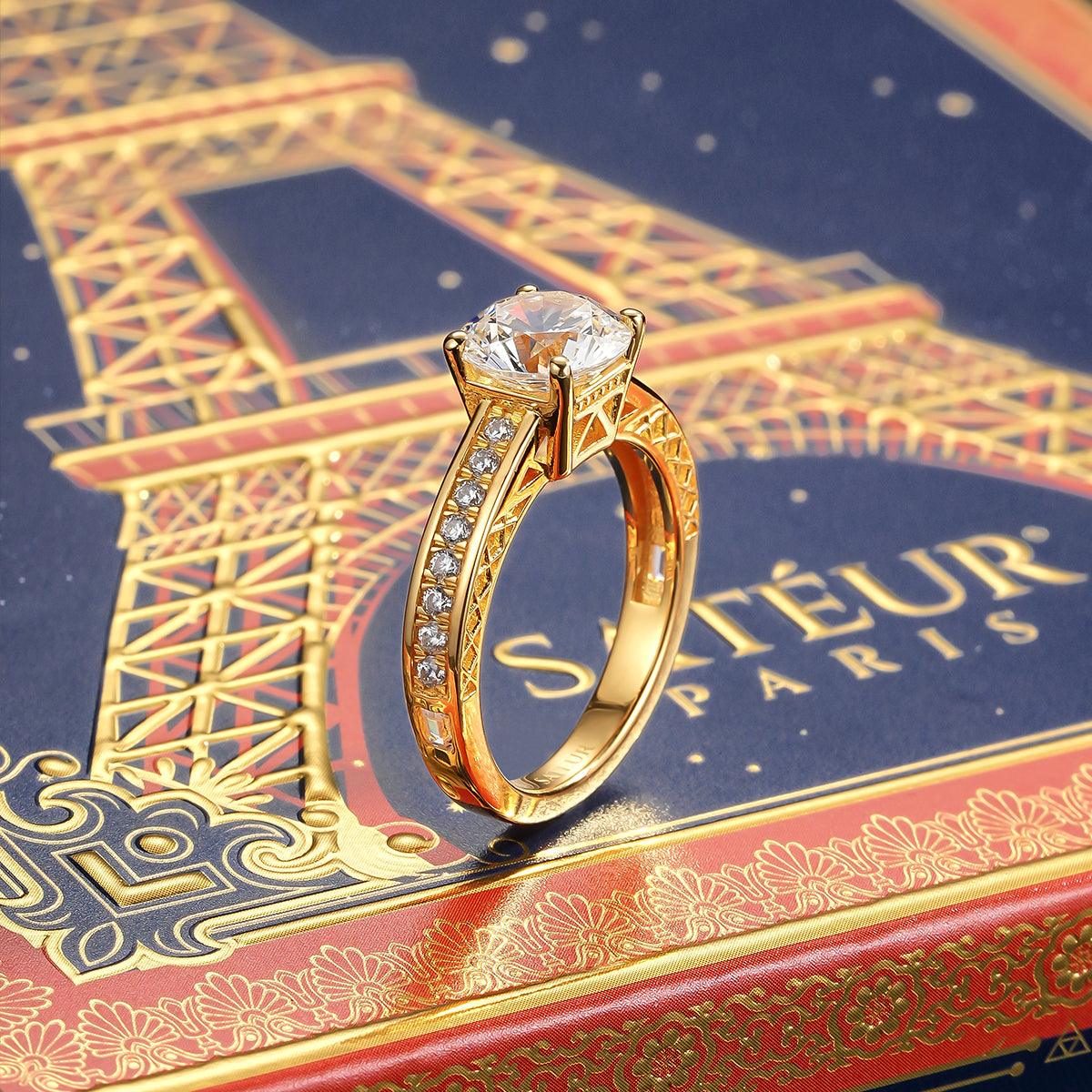
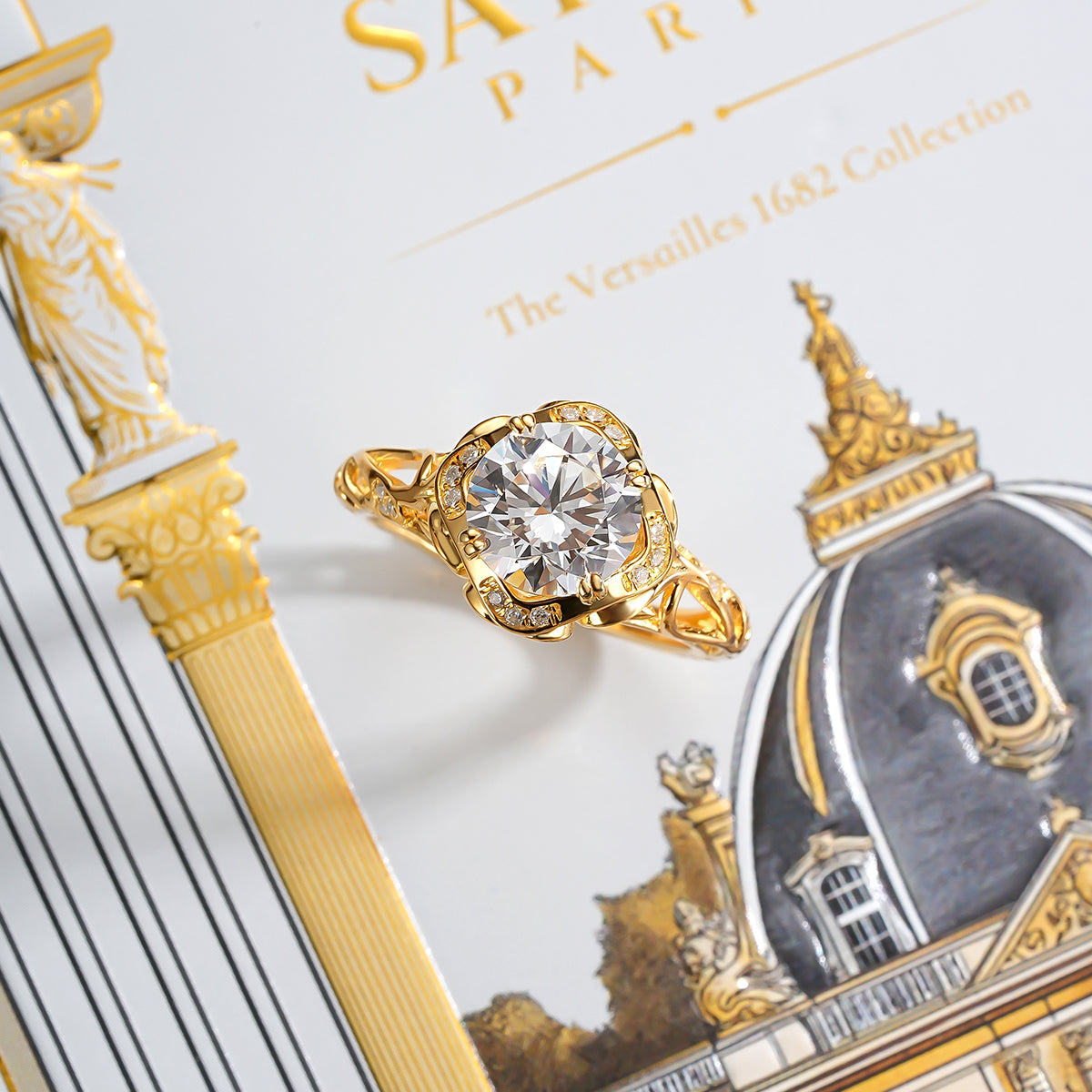
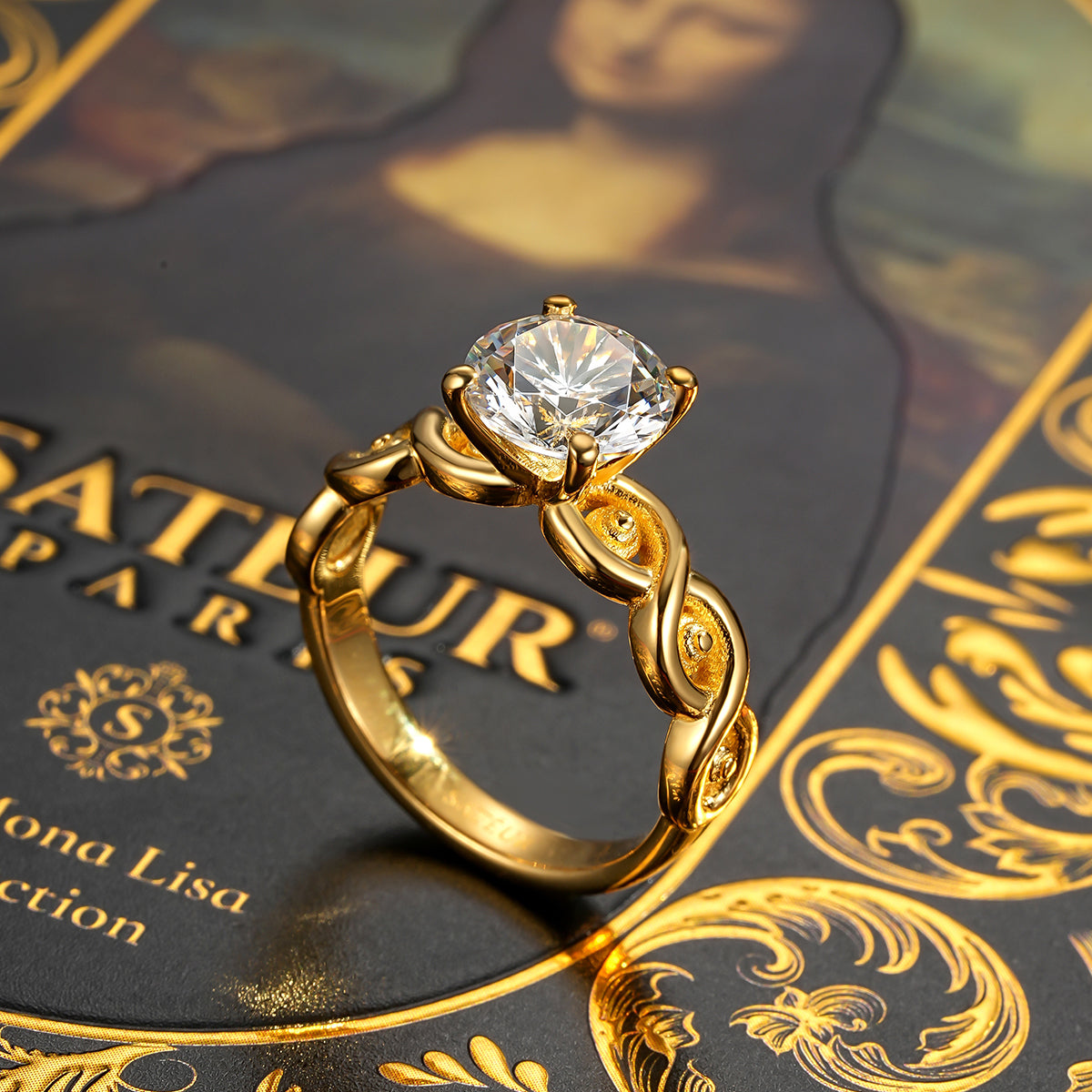
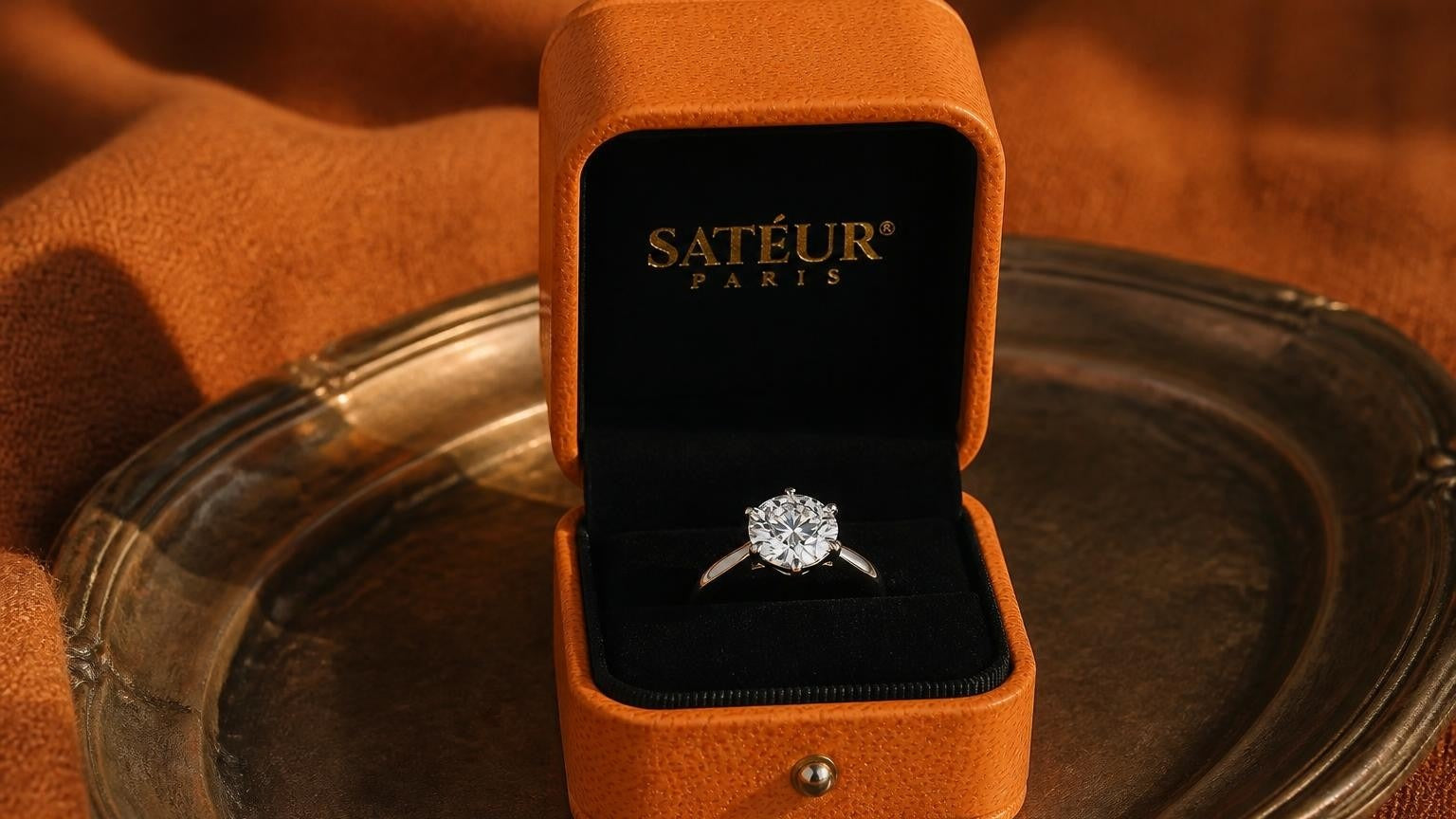
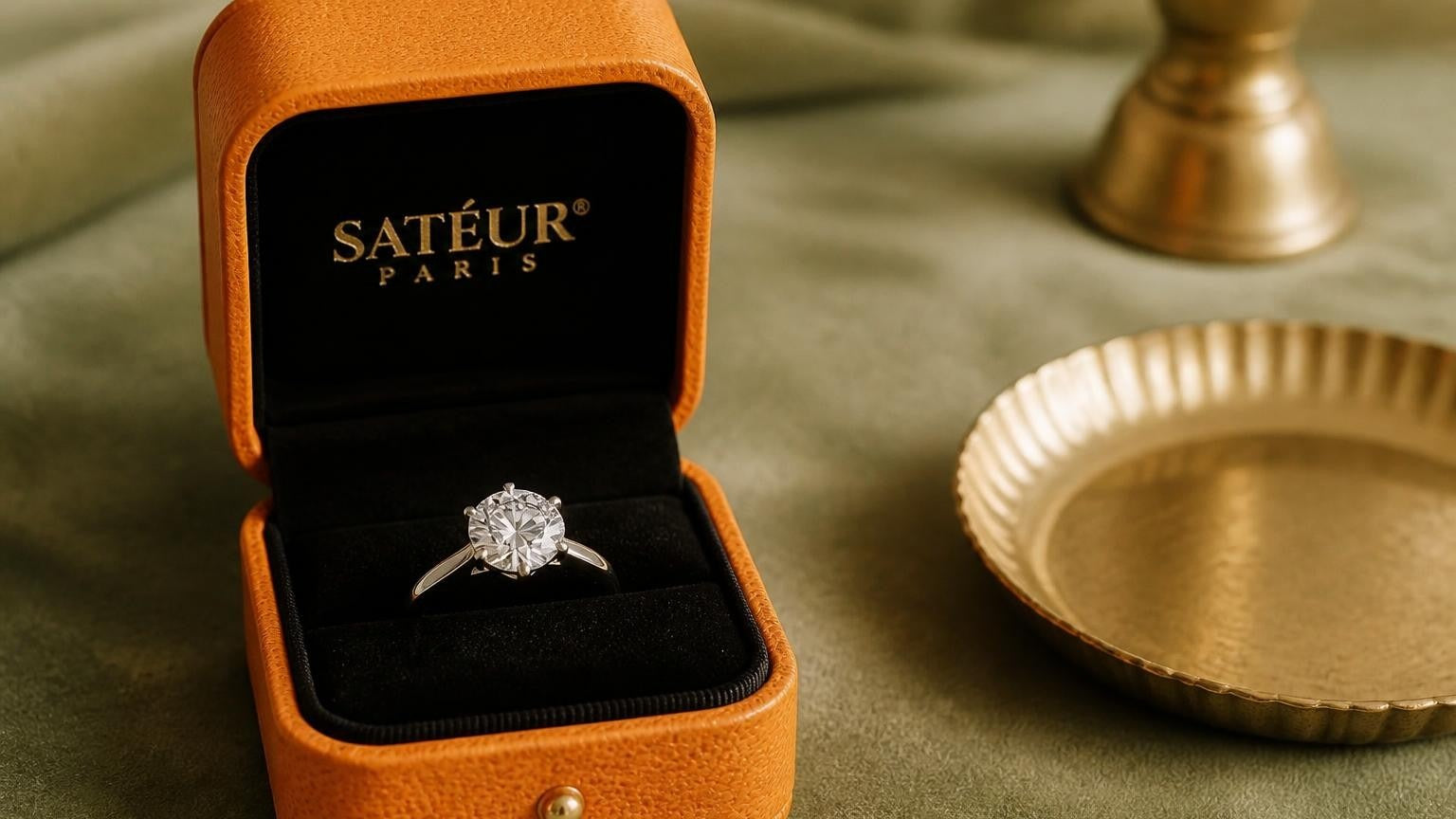
Satéur moissanite rings start from $68 — set in an 18k gold finish, D-E colour grade, Excellent cut. The visual presence of a fine diamond ring at roughly 1% of the mined diamond price. Every stone is openly disclosed as moissanite: lab-created, the same gemstone described throughout this guide.
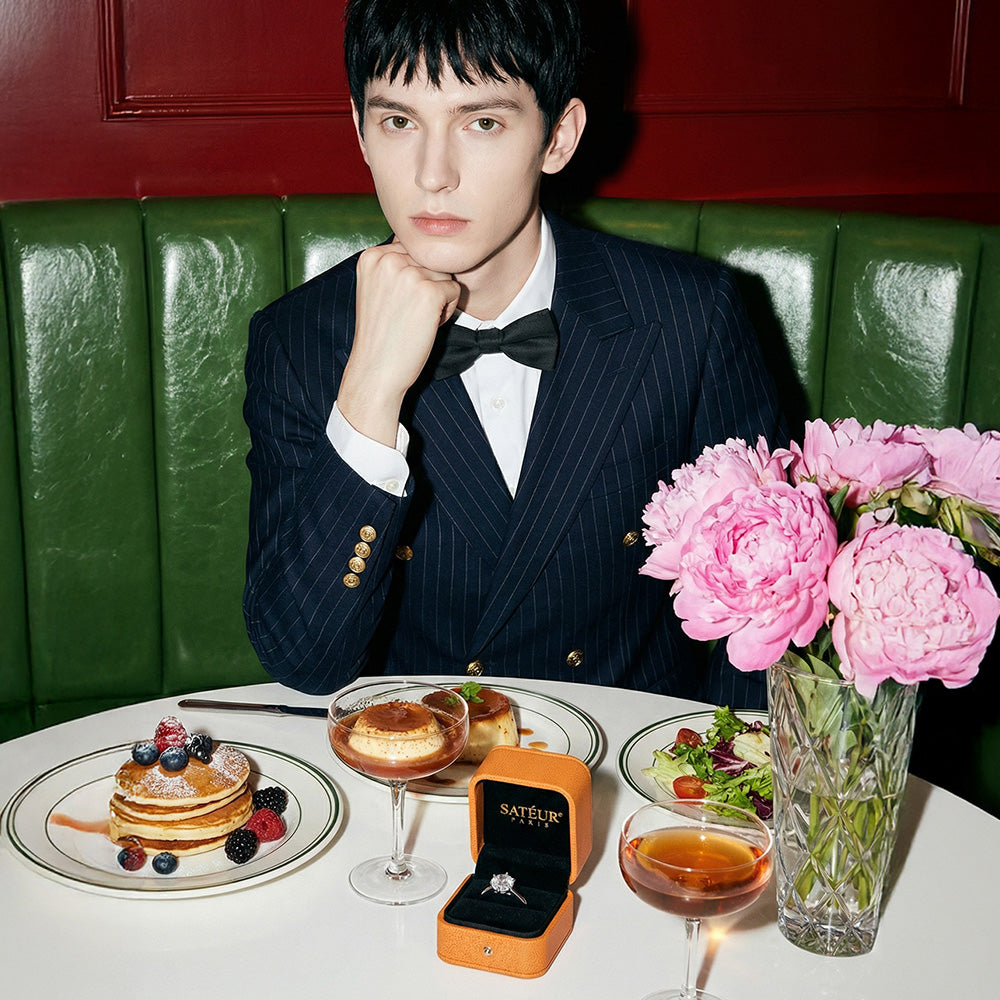
Each ring is delivered in the signature orange Satéur box with free worldwide delivery, a 30-day return window, and Lifetime Satéur Care. No ambiguity about what you are buying. Browse the Satéur moissanite rings collection.

Satéur Destinée Ring™
The look of a flawless diamond — from $138.
D-E colour · Excellent cut · 18k gold finish
Free worldwide delivery. 30-day returns. Lifetime Satéur Care.
Shop the Destinée RingFree worldwide shipping · 30-day returns · Lifetime Satéur Care
Frequently Asked Questions About Moissanite
What is moissanite and how is it made?
Moissanite is a lab-created gemstone composed of silicon carbide (SiC). Natural moissanite — first identified in 1893 in a meteorite crater — is extremely rare. All moissanite used in fine jewellery today is grown in a controlled laboratory environment. The process has been refined since the 1980s and produces a chemically consistent, high-purity gem that is openly labelled and disclosed at point of sale.
How does moissanite differ from a diamond in appearance?
Moissanite has a higher refractive index (2.65–2.69 vs diamond's 2.42) and approximately 2.4 times the fire — meaning it produces more vivid rainbow-coloured sparkle under light. Diamond returns crisper, more contained white brilliance. To the naked eye at normal viewing distances, both read as brilliant and premium. The difference in fire is most visible under direct bright light at close range.
Is moissanite durable enough for everyday wear?
Yes. At Mohs 9.25, moissanite is among the hardest gemstones available — harder than sapphire, second only to diamond. It does not scratch under normal daily conditions and retains its optical quality permanently. There is no degradation of brilliance or clarity over years of wear, making it well-suited for engagement rings and jewellery intended for everyday use.
Why does moissanite cost significantly less than diamond?
Moissanite is produced in a laboratory at controlled cost, without the mining, logistics, and certification infrastructure of the diamond supply chain. That reduction in production cost translates directly to retail price. A 1-carat moissanite solitaire starts at approximately $68–$138; a comparable mined diamond solitaire typically costs $4,000–$10,000. The lower price reflects supply chain differences, not a difference in wear performance.
Can moissanite be used in custom engagement ring designs?
Yes. Moissanite is available in all standard gem cuts — round brilliant, oval, cushion, emerald, pear, radiant, marquise — and is compatible with any setting style: solitaire, halo, pavé, three-stone, or bezel. Its Mohs 9.25 hardness makes it safe for prong, bezel, and channel settings. Most jewellers who work with fine gemstones can set moissanite.
How should moissanite jewellery be cleaned and maintained?
Warm water, mild dish soap, and a soft brush is sufficient for regular cleaning. Moissanite does not absorb oils or require special treatment. Ultrasonic and steam cleaners are generally safe but check with your specific jeweller for the setting metal. Avoid harsh chemical cleaners. Because moissanite does not scratch or cloud, there is no material degradation to manage — routine cleaning is the only maintenance required.















Leave a comment
This site is protected by hCaptcha and the hCaptcha Privacy Policy and Terms of Service apply.