



Simulated diamonds and moissanite are both popular diamond alternatives — but they are distinct categories with different compositions, durability profiles, and long-term value. Simulated diamonds are materials engineered to replicate the visual appearance of a diamond; moissanite is a lab-created gemstone in its own right, with optical properties that exceed mined diamond in certain measurable respects. Understanding the difference helps buyers make a decision they will not regret five years later.
Key Takeaways
- Moissanite rates 9.25 on the Mohs hardness scale, compared to diamond at 10 and cubic zirconia at 8–8.5.
- Simulated diamonds — typically cubic zirconia or crystal glass — cloud and scratch within 1–2 years of regular wear.
- Moissanite displays a refractive index of 2.65, producing approximately 2.4 times the fire of a mined diamond.
- Satéur moissanite rings begin from $68, offering D-E colour and Excellent cut at a fraction of mined diamond pricing.
- Moissanite's optical stability means it will not yellow or cloud under normal conditions over decades.

What is a Simulated Diamond?
Definition and categories
A simulated diamond — or diamond simulant — is any material designed to look like a diamond to the naked eye. It is not a synthetic version of diamond; it does not share diamond's crystal structure or chemical composition. It is an independent material shaped and cut to produce a diamond-like visual effect.
Common simulant materials
The most common simulants are cubic zirconia (CZ) and crystal glass. CZ is a synthetic form of zirconium dioxide, affordable and widely available.
Crystal glass products use lead oxide or barium oxide formulations to increase refractive index. Neither material approaches diamond's hardness, and neither maintains its appearance over years of daily wear.
Trademarked simulant gems
Trademarked simulant gems — including Satéur Gems® — are a separate tier within the simulant category. These are purpose-engineered with proprietary compositions to achieve higher optical performance and greater longevity than commodity CZ.
They remain distinct from moissanite and lab-created alternatives. See the moissanite ring vs diamond ring guide for context on how simulants compare to diamond in broader terms.
How Are Diamond Simulants Created?
Cubic zirconia is produced through a skull crucible process: powdered zirconium oxide is melted at high temperatures and cooled in a controlled environment to form crystals.
The process is inexpensive and scalable — hence CZ's low retail price of $20–$80 per carat. Trademarked simulant gems use proprietary manufacturing processes not publicly disclosed by their makers.
All simulant categories share one characteristic: they are less hard than diamond, and most are less hard than moissanite.
Hardness governs scratch resistance during daily wear — the practical consequence that distinguishes simulants from moissanite most clearly over time.
What is Moissanite?
Origin and composition
Moissanite is silicon carbide (SiC) — a distinct chemical compound, not a simulant. It was first discovered in 1893 by Henri Moissan in fragments of a meteorite in Arizona. Natural moissanite is extraordinarily rare; virtually all moissanite sold in jewellery today is lab-created via chemical vapour deposition or the Lely process.
Moissanite as a genuine gemstone
Calling moissanite a "fake diamond" is technically incorrect. Moissanite is a real gemstone with its own grading system, hardness, and optical signature. It is sold as moissanite — openly and accurately labelled — by reputable jewellers worldwide.

How is Moissanite Created?
Lab-created moissanite is grown under controlled conditions replicating the extreme heat at which silicon carbide forms in nature. The process takes weeks and requires precise temperature management.
Because moissanite is a distinct gemstone rather than an imitation of another, it is graded on its own D-F near-colourless scale. Premium D-E colour, Excellent cut grades produce stones visually indistinguishable from high-clarity diamond with the naked eye.
Differences Between Simulated Diamonds and Moissanite
The practical differences between a standard simulant and moissanite are significant across hardness, brilliance, fire, and longevity. The table below illustrates the key comparisons.
| Property | CZ Simulant | Moissanite | Mined Diamond |
|---|---|---|---|
| Mohs hardness | 8–8.5 | 9.25 | 10 |
| Refractive index | 2.15–2.18 | 2.65–2.69 | 2.42 |
| Fire (dispersion) | Low — glassy | Very high — rainbow | Crisp white |
| Longevity (daily wear) | 1–3 years before clouding | Indefinite | Indefinite |
| Price per carat | $20–$80 | $200–$600 | $3,000–$15,000+ |
| Colour stability | Yellows / hazes over time | Stable indefinitely | Stable indefinitely |
The durability gap is the decisive factor for everyday jewellery. A CZ ring worn daily will show visible surface degradation within one to two years — micro-scratches accumulate and scatter light, eliminating the initial brilliance.
Moissanite, at 9.25 Mohs, resists scratching from virtually everything encountered in daily life. Only diamond (Mohs 10) can scratch it.
Moissanite Specifications: Colour, Clarity, and Brilliance
Colour and clarity grading

Modern lab-created moissanite is produced in D-F near-colourless grades. D-E colour moissanite is visually indistinguishable from high-clarity diamond with the naked eye in standard lighting.
The slight warmer tone present in earlier generations of moissanite has been eliminated in current production.
Fire and brilliance
Moissanite's refractive index of 2.65–2.69 is higher than diamond's 2.42 — this generates approximately 2.4 times the fire (coloured light dispersion) of mined diamond.
Under natural and indoor light, moissanite produces vivid rainbow sparkle. Some buyers prefer this intensified fire; others prefer diamond's crisper, whiter brilliance. Neither is objectively superior — it is a matter of personal preference.
- Colour: D-E near-colourless in premium grades
- Clarity: Eye-clean in standard production; inclusions not visible to the naked eye
- Brilliance: RI 2.65–2.69 — vivid coloured fire, highest of any gemstone category
- Hardness: 9.25 Mohs — scratch-resistant for lifelong daily wear
- Stability: Will not cloud, yellow, or degrade under normal conditions

Satéur Moissanite: The Value Proposition
Pricing and specification
Satéur's moissanite range — available at Satéur moissanite rings — offers D-E colour, Excellent cut moissanite in the Destinée setting from $68 for the 1-carat variant. That is a significant fraction of what a comparable mined diamond would cost: a 1-carat D-colour Excellent cut mined diamond retails between $3,000 and $8,000 depending on origin and certificate.
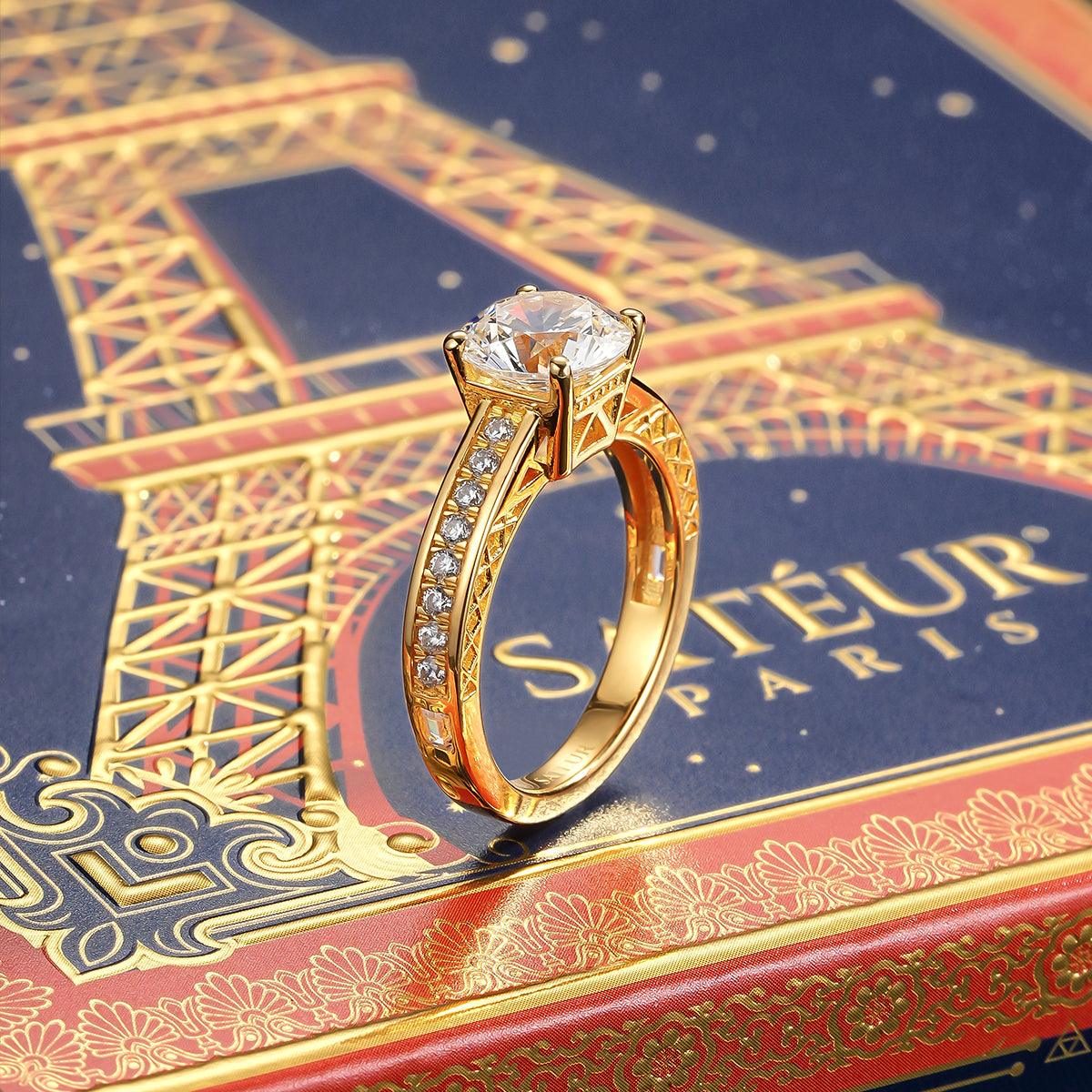
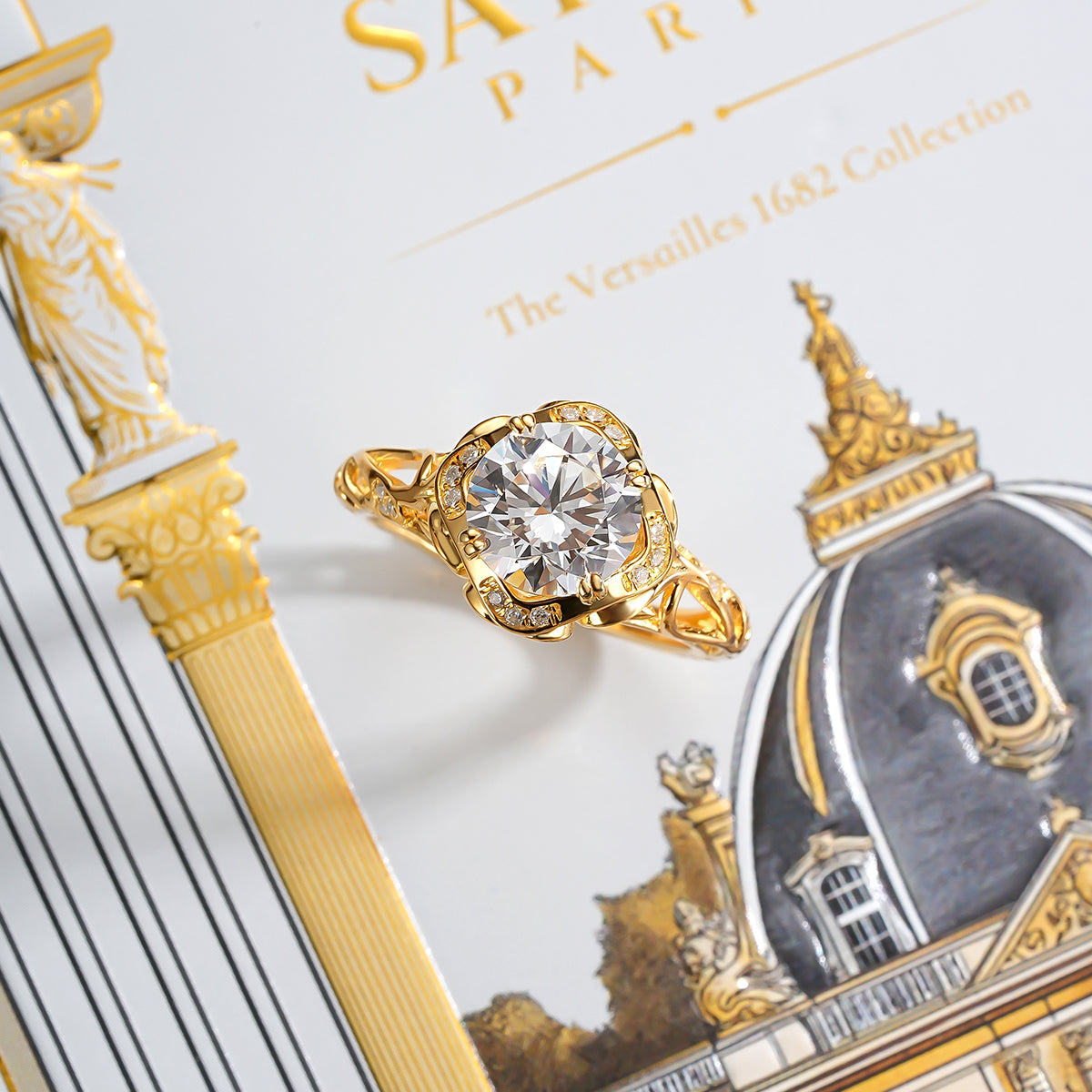
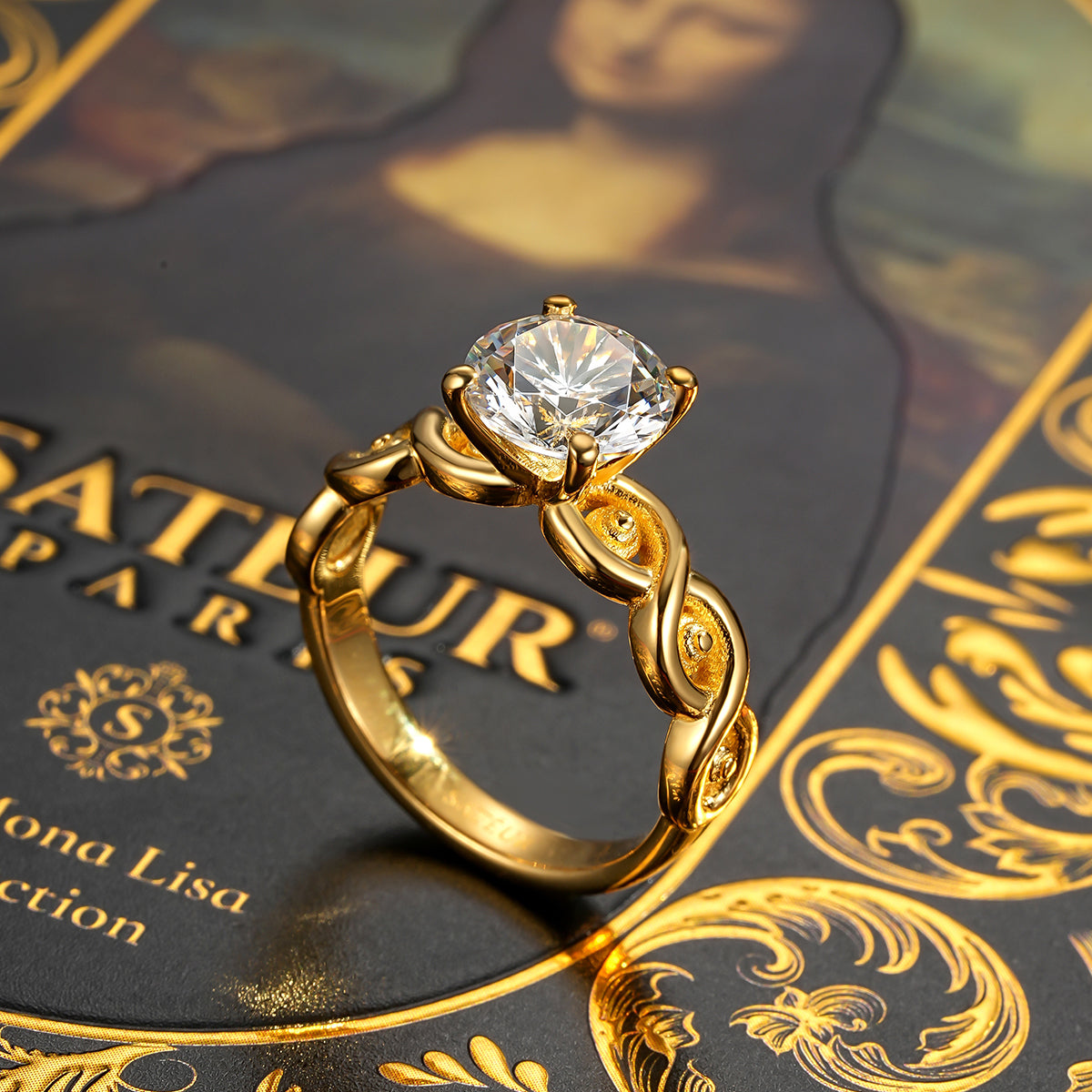
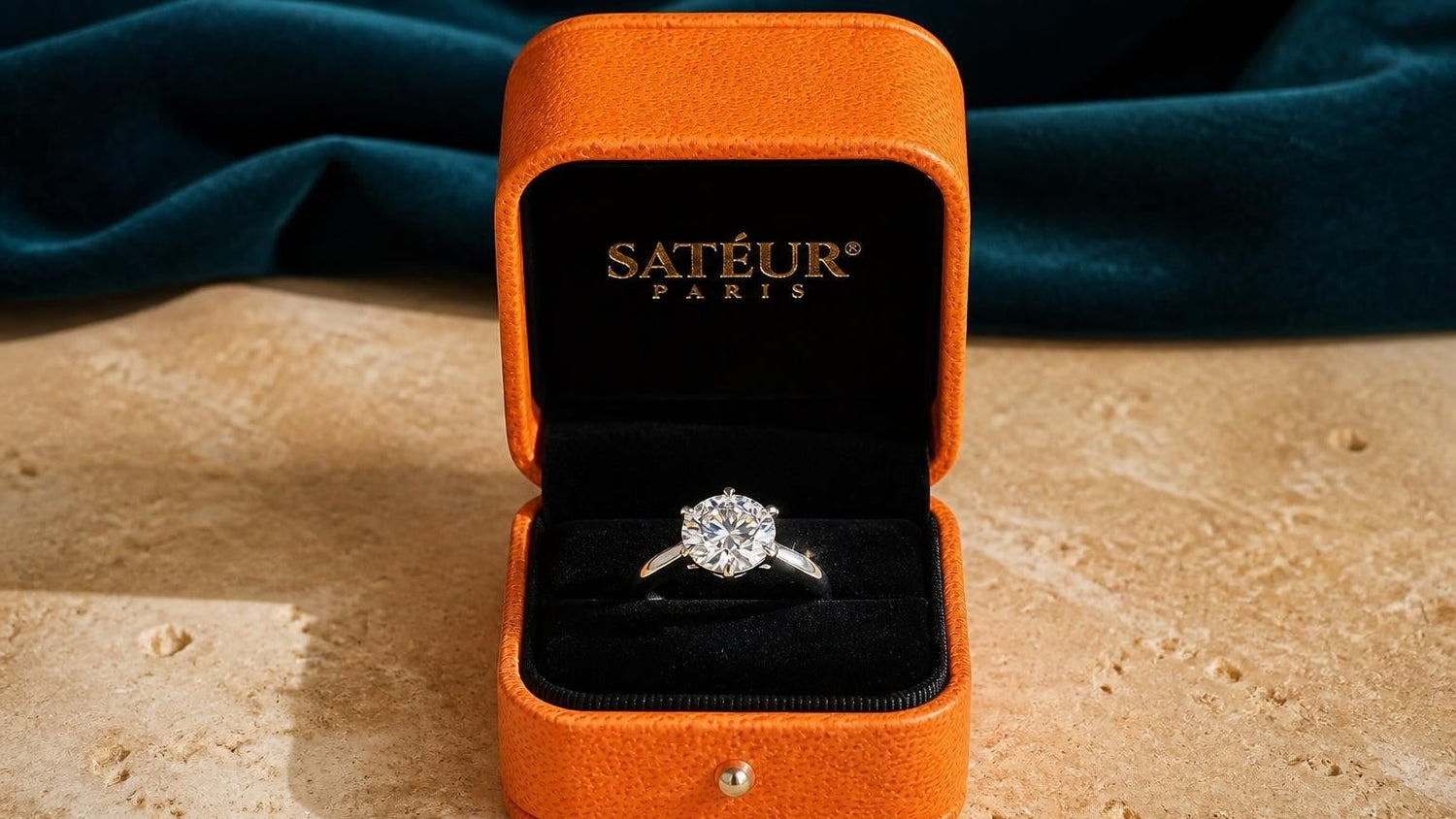
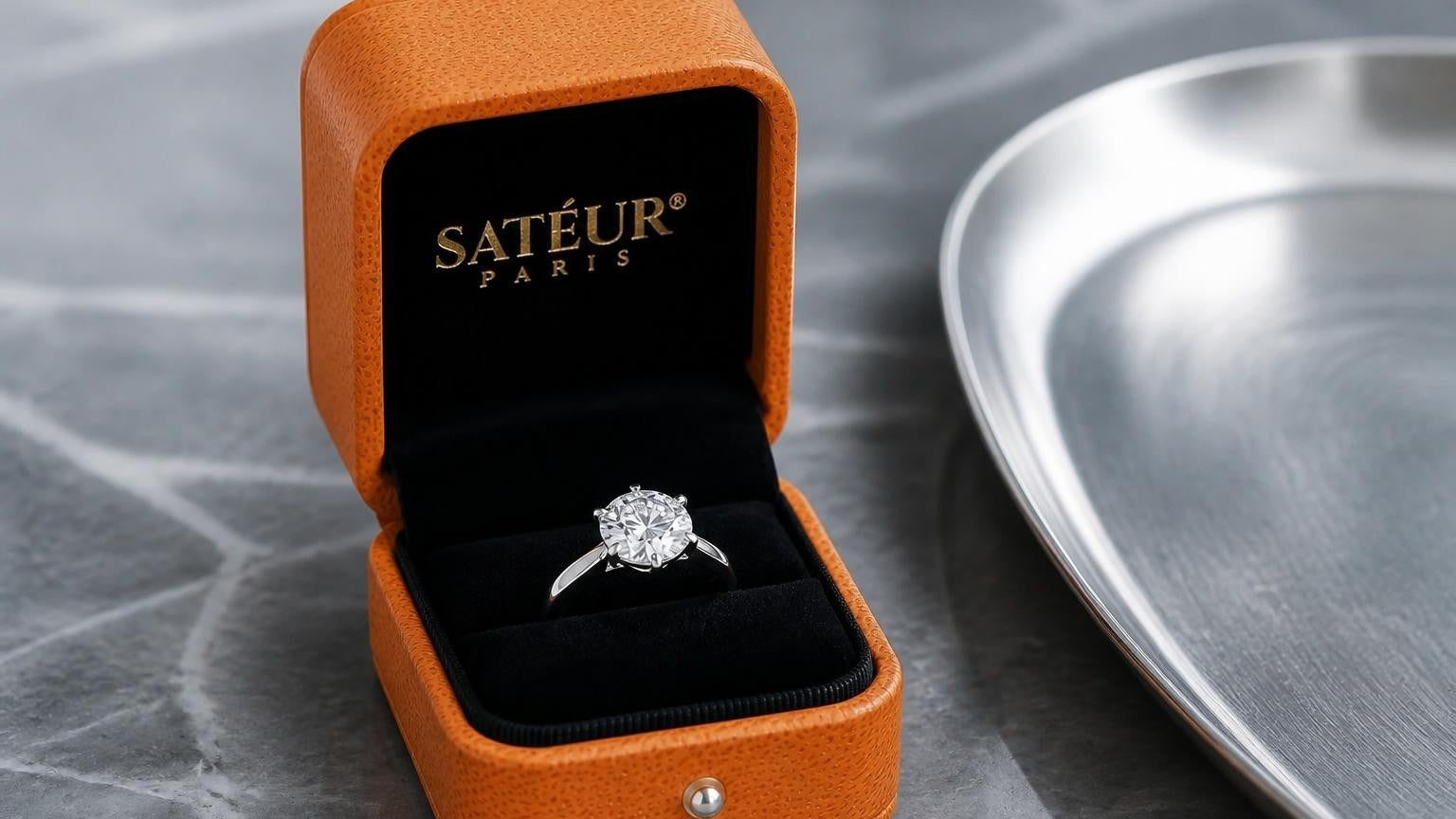
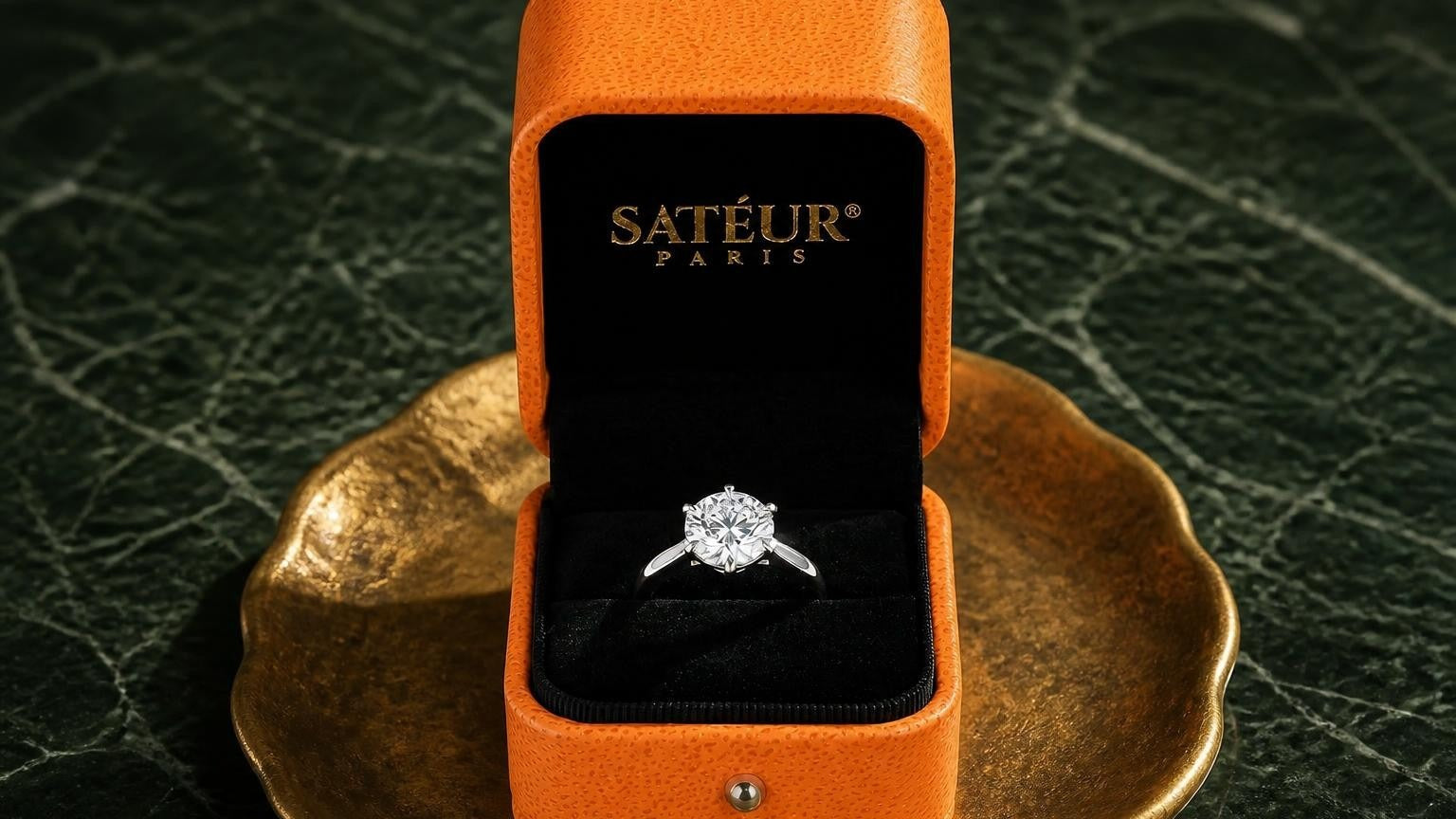
The Satéur Destinée Ring™ is the brand's flagship design — a classic round brilliant solitaire in 18k gold finish. The same design is available in both Satéur Gems® and Satéur Moissanite variants, letting buyers choose based on their priorities.
The moissanite variant at $68 is priced at roughly 1% of an equivalent mined diamond.
Who moissanite suits
For buyers who want the exceptional fire profile of moissanite — vivid rainbow dispersion, near-colourless grading, and a hardness rating that ensures the stone will look the same in twenty years — Satéur's moissanite collection is a direct route to that combination at an accessible price point. Compare to the moissanite vs diamond vs lab diamond comparison for a fuller picture of each tier's trade-offs.
Comparison: Durability and Longevity
Durability is where the choice between simulants and moissanite becomes clearest. Cubic zirconia's 8–8.5 Mohs rating means everyday contact with harder particles — ceramic tiles, car keys, granite surfaces — will progressively abrade the surface. The effect is invisible initially but produces a visibly dull stone within one to three years of daily wear.
Moissanite at 9.25 Mohs resists scratching from virtually all everyday contact. The only material that can scratch it is diamond (Mohs 10). A moissanite engagement ring maintains its original optical performance indefinitely under normal conditions. The moissanite vs diamond full comparison covers durability alongside cost context.
Pricing and Cost Considerations
CZ costs $20–$80 per carat at retail; moissanite costs $200–$600 per carat loose, reflecting its multi-week growth process.
Across a five-year horizon the gap narrows: a CZ ring replaced every two to three years approaches moissanite's one-time cost, without matching its durability or optical quality.
For a piece worn daily for decades, moissanite's upfront premium is justified by the absence of replacement cycles.
Satéur moissanite rings start from $68 — D-E colour, Excellent cut, 1 carat in the Destinée setting — placing premium moissanite at roughly 1% of an equivalent mined diamond's retail price.

Satéur Destinée Ring™
The look of a flawless diamond — from $138.
D-E colour · Excellent cut · 18k gold finish
Free worldwide delivery. 30-day returns. Lifetime Satéur Care.
Shop the Destinée RingFree worldwide shipping · 30-day returns · Lifetime Satéur Care
Choosing Between Simulants and Moissanite for Your Ring
When simulants make sense
The right choice depends on intended use and budget horizon. For fashion jewellery, occasional-wear pieces, or items not purchased for longevity, simulants — including CZ and crystal glass — are entirely reasonable. They offer diamond-look aesthetics at minimal cost, and their short lifespan is acceptable for the category.
When moissanite is the better choice
For an engagement ring or any piece intended for daily wear over years, moissanite is the better-suited choice among diamond alternatives.
Its hardness ensures the stone will not scratch or cloud; its optical stability means the fire you see at purchase is the fire you will see a decade later. Its price, while higher than CZ, is a fraction of comparable mined diamond cost.
Trademarked simulants vs moissanite
Buyers seeking a trademarked simulant with proprietary optical engineering will find options like Satéur Gems® positioned between commodity CZ and moissanite on price and performance. For buyers who prioritise moissanite's fire profile and openly disclosed gemstone status, Satéur's moissanite collection is the recommended route. See the moissanite ring vs diamond ring comparison for how these options sit relative to mined diamond.
Frequently Asked Questions
What is the main difference between a simulated diamond and moissanite?
A simulated diamond (such as cubic zirconia) is a material engineered to look like a diamond. Moissanite is a distinct lab-created gemstone — silicon carbide — with its own grading system. Moissanite is harder (9.25 vs 8–8.5 Mohs), has a higher refractive index, and will not cloud or degrade under daily wear, unlike CZ which shows visible surface degradation within one to three years.
How long does a simulated diamond last compared to moissanite?
CZ and crystal glass simulants show visible surface abrasion within one to three years of daily wear. Accumulated micro-scratches scatter light and eliminate the initial brilliance. Moissanite at 9.25 Mohs resists scratching from virtually all everyday contact and maintains its optical performance indefinitely — there is no expected replacement cycle.
What causes the visual differences between simulated diamonds and moissanite?
Primarily refractive index. Moissanite's RI of 2.65–2.69 exceeds both CZ (2.15–2.18) and diamond (2.42), producing approximately 2.4 times the fire of mined diamond. CZ's lower RI generates flat, glassy light return. Over time, CZ's abraded surface further reduces brilliance, widening the visual gap.
Is moissanite more durable than cubic zirconia and other simulants?
Yes. Moissanite rates 9.25 Mohs versus 8–8.5 for CZ. Only diamond (Mohs 10) is harder.
This means moissanite resists the everyday abrasion — dust, ceramics, metal surfaces — that progressively damages CZ. For daily-wear jewellery, the durability difference is decisive.
How does the price of moissanite compare to simulated diamond alternatives?
CZ costs $20–$80 per carat loose. Moissanite costs $200–$600 per carat loose. Satéur moissanite rings begin from $68 — D-E colour, Excellent cut, 1 carat. Over five years, moissanite's lack of replacement cycles makes the cost comparison competitive with CZ rings that require periodic replacement.
Can moissanite be used in engagement rings and fine jewellery?
Yes. Moissanite has been used in engagement rings for over two decades. Its hardness of 9.25 makes it suitable for all standard ring settings and daily wear. It is openly sold and labelled as moissanite by reputable jewellers, at a fraction of comparable mined diamond pricing.















Leave a comment
This site is protected by hCaptcha and the hCaptcha Privacy Policy and Terms of Service apply.