



Cubic zirconia and diamond share one quality: to the naked eye, both appear colourless and brilliant. Beyond that first impression the two gems diverge — in hardness, longevity, optical character, density, and price.
Cubic zirconia is the most affordable option, but its surface scratches and clouds within one to three years of regular wear. A diamond — mined, lab-grown, or simulated — holds its appearance indefinitely.
Key Takeaways
- Diamonds rate 10 on the Mohs hardness scale; cubic zirconia rates 8–8.5, making it more prone to surface scratching.
- Cubic zirconia typically lasts two years under regular wear before visible clouding occurs, while diamond remains optically stable indefinitely.
- Cubic zirconia weighs approximately 75% more than a diamond of the same carat size, creating a noticeably denser feel.
- Satéur Gems®, a trademarked diamond simulant, achieves D–E colour-grade equivalent appearance and Excellent cut performance at approximately 1% of a mined diamond's price.
- Entry-level diamond simulant jewellery from Satéur begins from $98, compared to thousands for mined diamond equivalents.
Cubic Zirconia vs Diamond: Core Differences
Cubic zirconia (CZ) is a synthesised form of zirconium oxide. Diamond is pure crystallised carbon — formed under extreme pressure, whether mined from the earth or grown in a laboratory.
Both gems are cut into the same round brilliant and fancy shapes and appear colourless. The differences become apparent through everyday wear.
| Property | Diamond | Cubic Zirconia |
|---|---|---|
| Mohs hardness | 10 | 8.0–8.5 |
| Refractive index | 2.42 | 2.15–2.18 |
| Dispersion (fire) | 0.044 | 0.066 |
| Density | 3.51 g/cm³ | 5.65–5.95 g/cm³ |
| Optical character | Crisp white brilliance | Rainbow dispersion; dulls over time |
| Longevity | Indefinite with normal care | Clouds within 1–3 years |
| Price (1 carat equiv.) | $4,000–$10,000+ mined | Under $50 |
What Is Cubic Zirconia?
Cubic zirconia is lab-made from zirconium oxide, stabilised with yttrium or calcium. It entered jewellery markets in the late 1970s as an affordable diamond simulant and is manufactured flawless — free of the inclusions common in natural diamonds.
Its limitation is hardness. A Mohs rating of 8–8.5 means everyday abrasives — dust, ceramic surfaces, bag linings — scratch the facets over time, causing clouding that routine cleaning cannot reverse.
See our guide to whether cubic zirconia is a fake diamond or a valuable alternative.

Diamond Characteristics and Durability
Hardness and everyday wear
Diamond rates 10 on the Mohs scale — the highest of any natural material. Virtually nothing in everyday contact is hard enough to scratch it.
A well-cared-for diamond ring worn daily retains its facet sharpness and optical clarity for decades.
Lab-grown diamonds share the same carbon composition and crystalline structure as mined diamonds and carry IGI or GIA certification. They typically sell at 60–80% less than equivalent mined stones.
Colour, clarity and the 4 Cs
Diamonds are graded on cut, colour, clarity, and carat weight. Colour runs from D (colourless) to Z (light yellow).
Cut has the greatest impact on visual performance: an Excellent-cut diamond will outshine a better-coloured stone with a poor cut.

Appearance: How They Look to the Naked Eye
Fresh from the setter, a high-quality CZ and a diamond look similar in normal indoor light. Diamond produces crisp white brilliance; CZ's higher dispersion rate (0.066 vs diamond's 0.044) creates a more pronounced rainbow flash.
This distinction becomes more apparent at larger carat sizes.
The significant difference emerges over time: CZ facets accumulate micro-scratches that create a foggy appearance visible to the naked eye after one to three years of daily wear.
Weight and Feel in Jewellery
Cubic zirconia is substantially denser than diamond: approximately 5.65–5.95 g/cm³ versus diamond's 3.51 g/cm³. A CZ stone of the same physical size weighs roughly 75% more — noticeably heavier in the hand. For this reason, CZ is usually sold by millimetre dimension rather than carat weight.
Longevity: Wear Patterns Over Time
How cubic zirconia ages
Cubic zirconia typically lasts two years under regular wear before visible clouding occurs. Surface scratching and micro-pitting trap oils and residue that cannot be fully removed by cleaning. A CZ ring worn daily may need replacing within two to three years.
Why diamond holds its appearance
Diamond does not cloud. Its hardness keeps facets sharp and the surface resistant to abrasion — the central practical argument for choosing diamond or a durable simulant over CZ for daily wear. See our guide to buying a cubic zirconia engagement ring.

Satéur Gems®: Diamond-Look Simulant Alternative
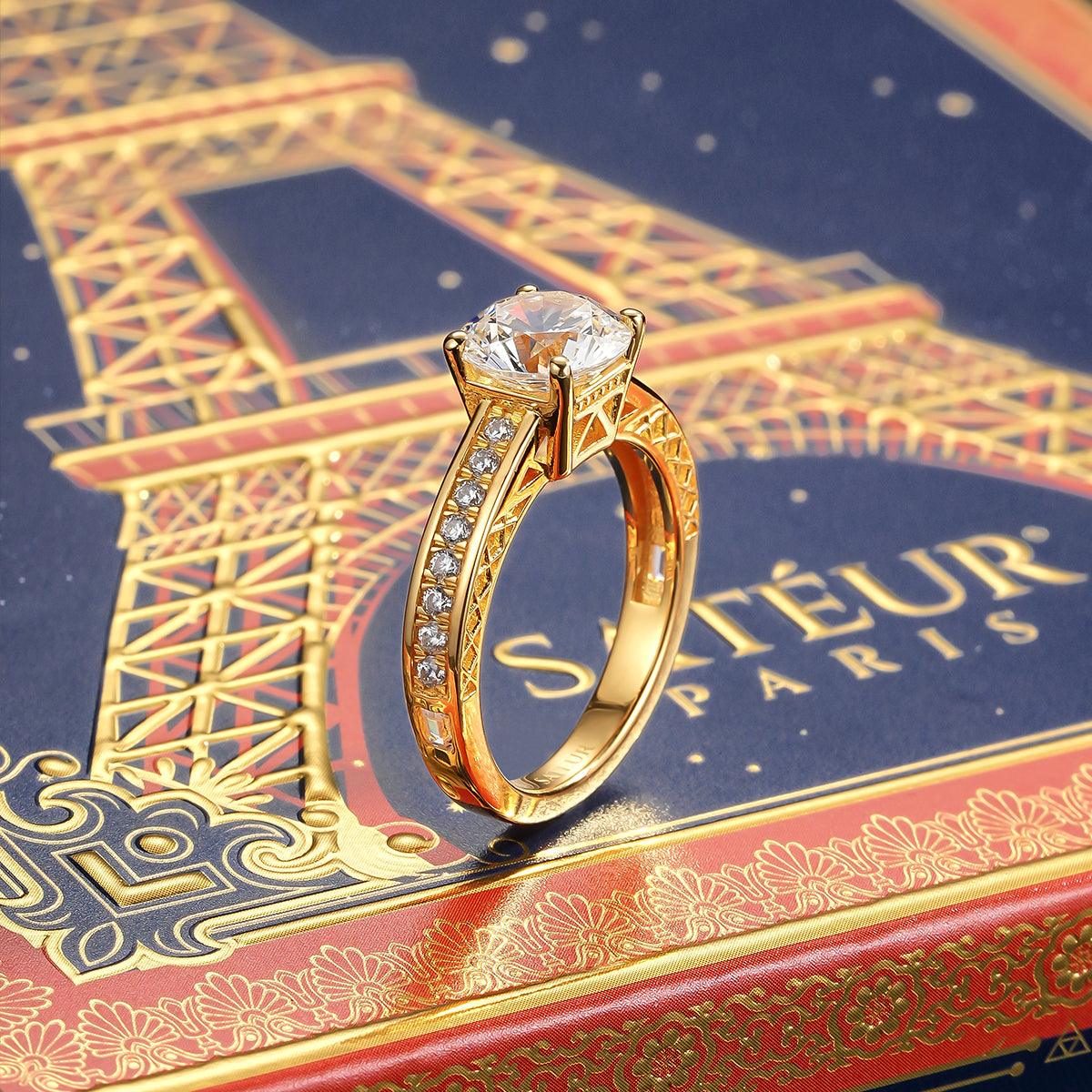
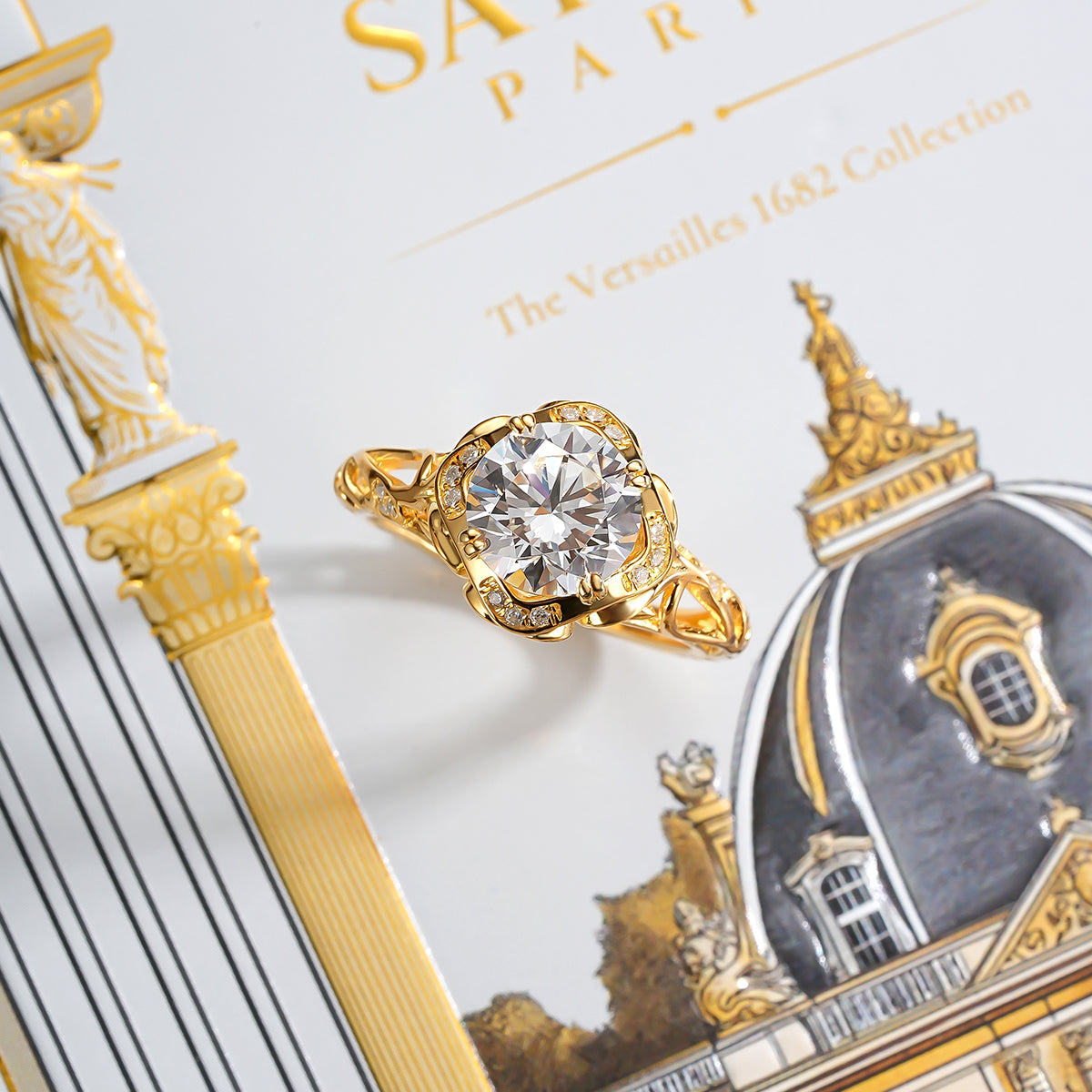
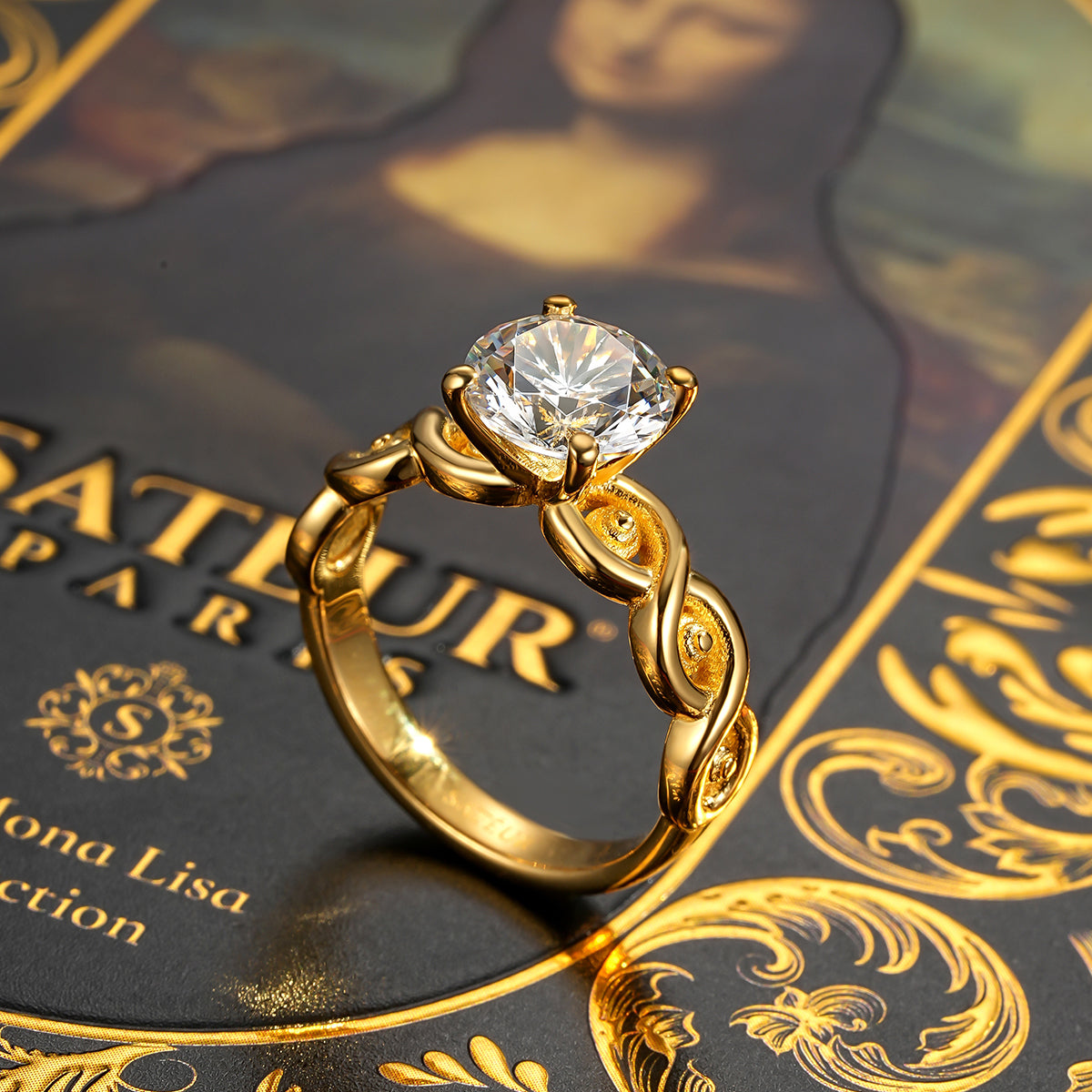
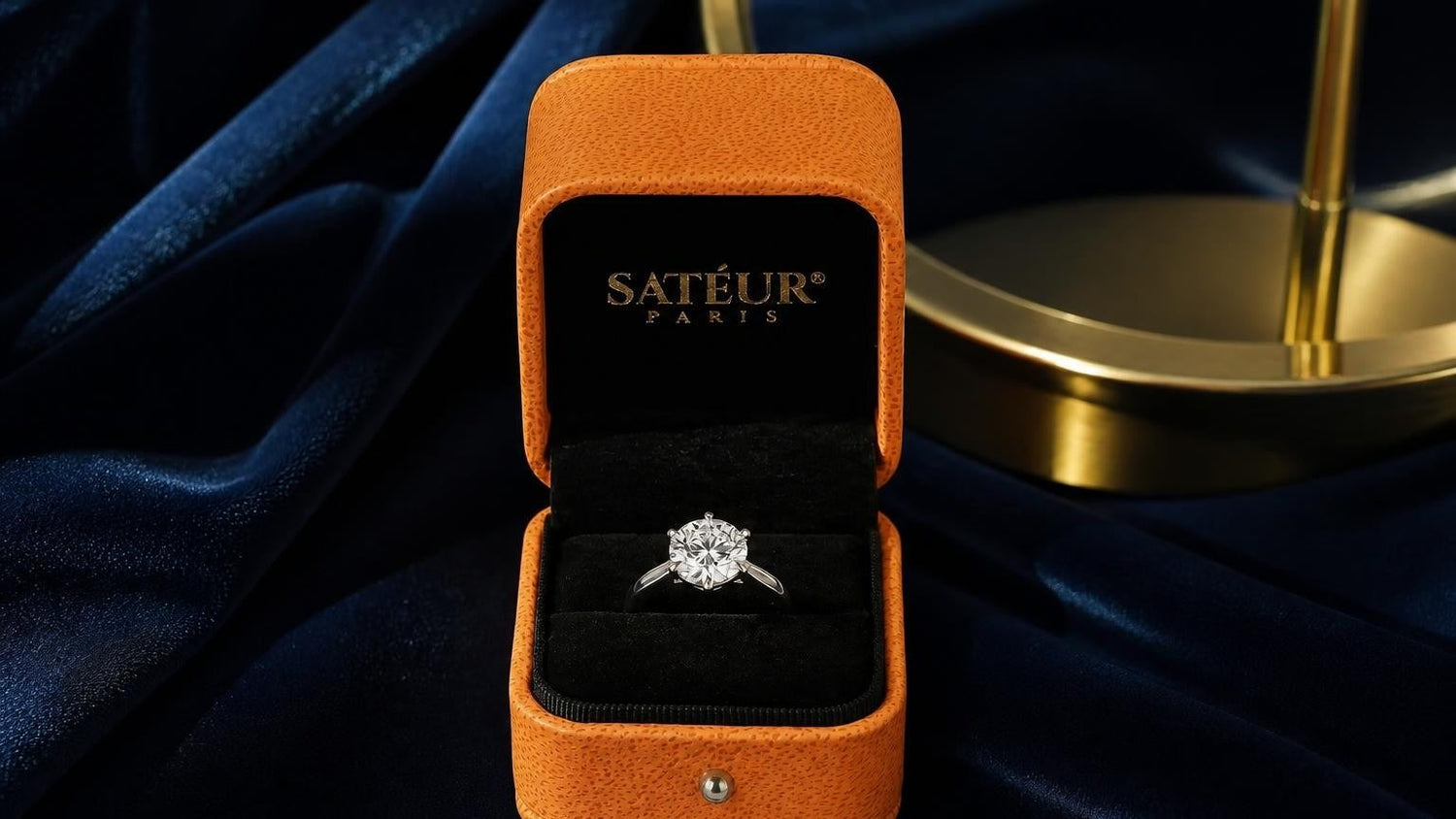
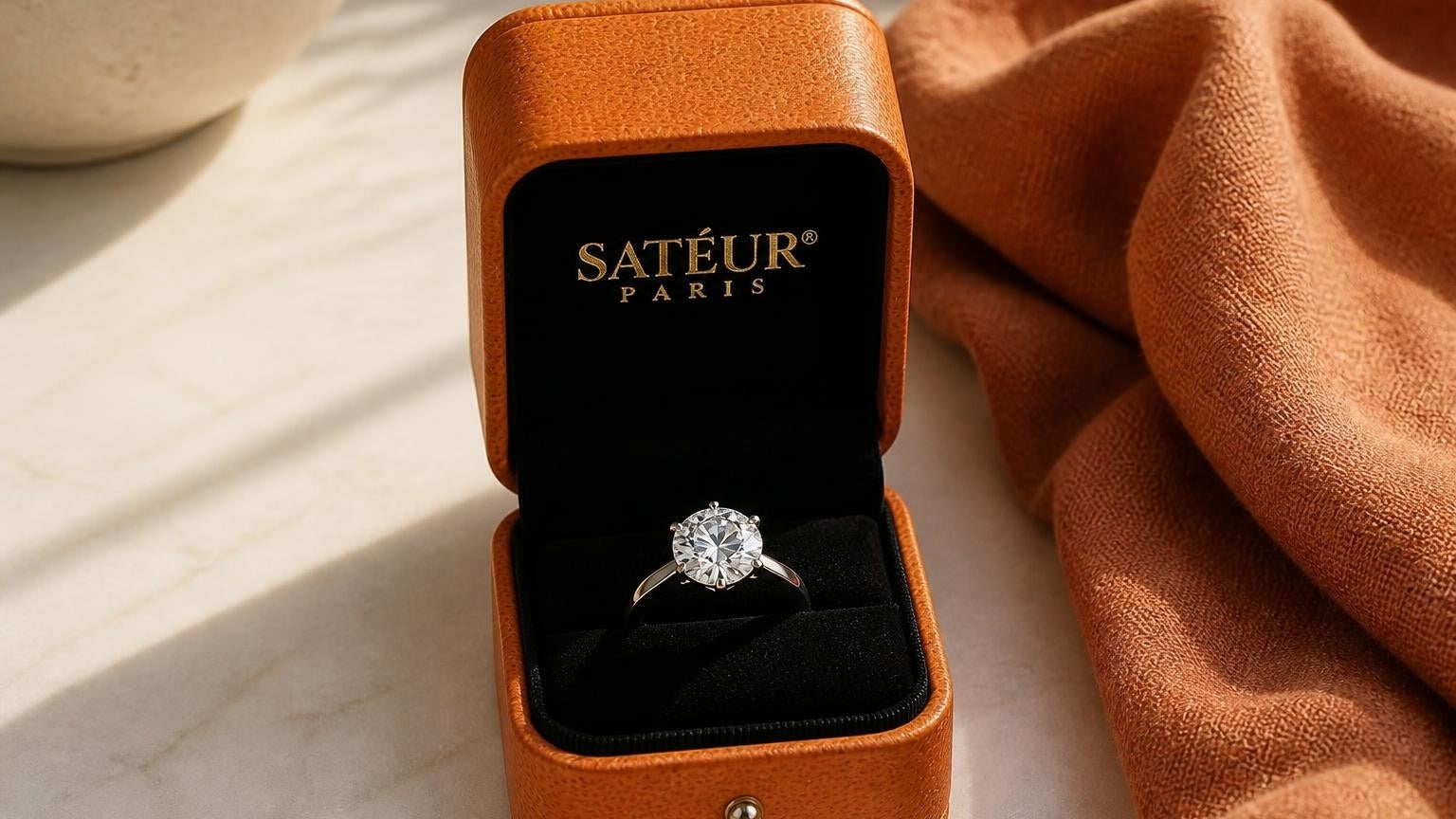
Satéur Gems® is a trademarked diamond simulant engineered for the clean white brilliance of a flawless diamond.
It is durable where CZ is not, and returns crisp white optical character rather than moissanite's vivid rainbow fire.
Key specifications
- Colour: D–E equivalent (colourless range)
- Cut: Excellent
- Optical character: Clean white brilliance of a flawless diamond
- Price: From $98 — approximately 1% of a comparable mined diamond
Browse the full range of Satéur engagement rings, including Gems®, moissanite, and lab-grown diamond options.
Pricing Comparison: Diamond, Cubic Zirconia, and Diamond Simulants
| Option | Typical price (1 carat equiv.) | Durability |
|---|---|---|
| Mined diamond | $4,000–$10,000+ | Indefinite |
| Lab-grown diamond | $800–$2,500 | Indefinite |
| Satéur Gems® simulant | From $98 | Long-term optical stability |
| Moissanite (Satéur) | From $68 | Long-term (Mohs ~9.25) |
| Cubic zirconia | Under $50 | 1–3 years before clouding |
For sterling silver CZ options, see our guide to the best cubic zirconia and sterling silver rings.
Choosing the Right Stone for Your Engagement Ring
Daily wear, long term
Choose diamond (mined or lab-grown), a quality simulant, or moissanite. All hold their optical performance through years of daily contact.
Occasional or fashion wear
Cubic zirconia performs well and offers excellent value for pieces worn infrequently. Its clouding limitation rarely surfaces within a normal fashion replacement cycle.
Budget-conscious with diamond appearance
A simulant such as Satéur Gems® delivers D–E colour-grade equivalent brilliance at approximately 1% of the mined-diamond price. The look, the moment — without the markup.
Satéur Destinée Ring™

The look of a flawless diamond — from $138.
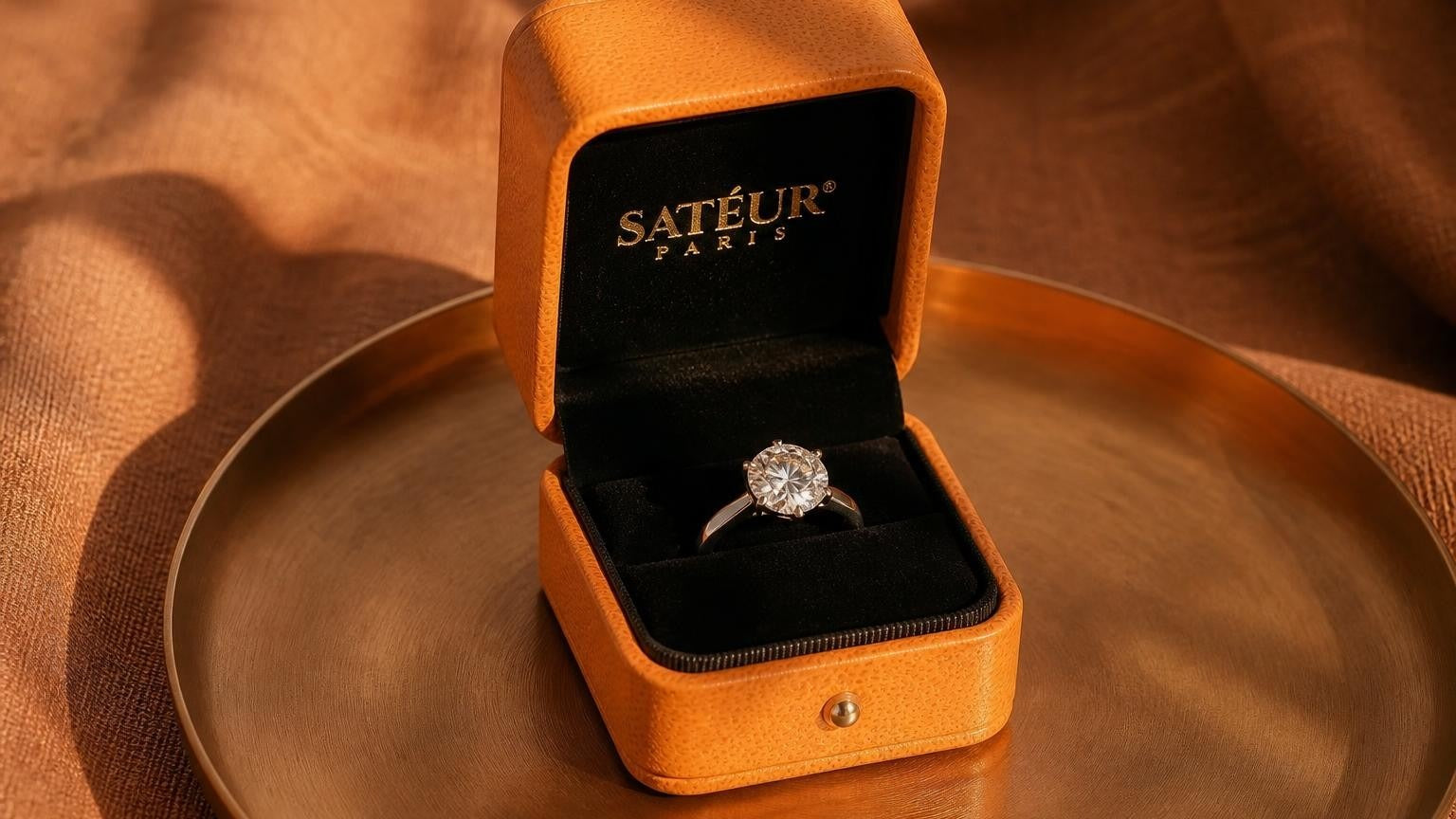
The Satéur Destinée Ring™ — a round-cut Satéur Gems® centrepiece in a classic six-prong solitaire, hand-set in an 18k white-gold finish band. D–E colour-grade equivalent, Excellent cut, 1 to 7 carats.
- Clean white brilliance of a flawless diamond — to the naked eye
- Approximately 1% of a comparable mined diamond's price
- Free delivery, 30-day returns, Lifetime Satéur Care
Not a diamond. A different answer to the same question — the look, the moment, without the markup.
Frequently Asked Questions
What is the main visual difference between cubic zirconia and diamond?
Diamond produces crisp white brilliance; CZ has a higher dispersion rate creating a more pronounced rainbow effect. More practically, CZ surfaces accumulate micro-scratches that cause visible clouding within one to three years of regular wear. Diamond — or a durable simulant — remains optically stable indefinitely.
How long does cubic zirconia typically last in an engagement ring?
Cubic zirconia typically lasts around two years under regular daily wear before visible clouding occurs. The clouding is caused by surface abrasion from everyday contact, combined with oils that collect in the scratched surface. For daily wear over many years, a more durable gem is the more practical choice.
Why do cubic zirconia stones cloud over time?
CZ clouds because its Mohs hardness of 8–8.5 makes it vulnerable to common abrasives — dust, ceramic surfaces, bag linings. These micro-scratches diffuse incoming light rather than reflecting it cleanly, creating the foggy appearance that signals a worn CZ. It is a surface phenomenon, not an internal change.
What are diamond simulants and how do they compare to cubic zirconia?
Diamond simulants are materials engineered to replicate the visual appearance of diamond. Unlike CZ — a general-purpose synthetic — premium simulants are formulated to match diamond's optical character: white brilliance, colour grade, and cut performance. The key difference is durability: a quality simulant holds its appearance over time, whereas CZ clouds within one to three years.
Is a diamond simulant a better choice than cubic zirconia for durability?
For a ring worn daily over several years, yes. Satéur Gems® maintains its optical performance over the long term, whereas CZ will show visible cloudiness within one to three years. For fashion jewellery worn occasionally, CZ remains a cost-effective option.
What price range should I expect for diamond simulant versus mined diamond jewellery?
Entry-level diamond simulant jewellery from Satéur begins from $98 — approximately 1% of a comparable mined diamond. A one-carat mined diamond in the D–F colour range typically retails at $4,000–$10,000. Lab-grown diamonds run $800–$2,500 per carat. Cubic zirconia stones cost under $50, though their shorter lifespan under daily wear affects the long-term value calculation.
















Leave a comment
This site is protected by hCaptcha and the hCaptcha Privacy Policy and Terms of Service apply.