



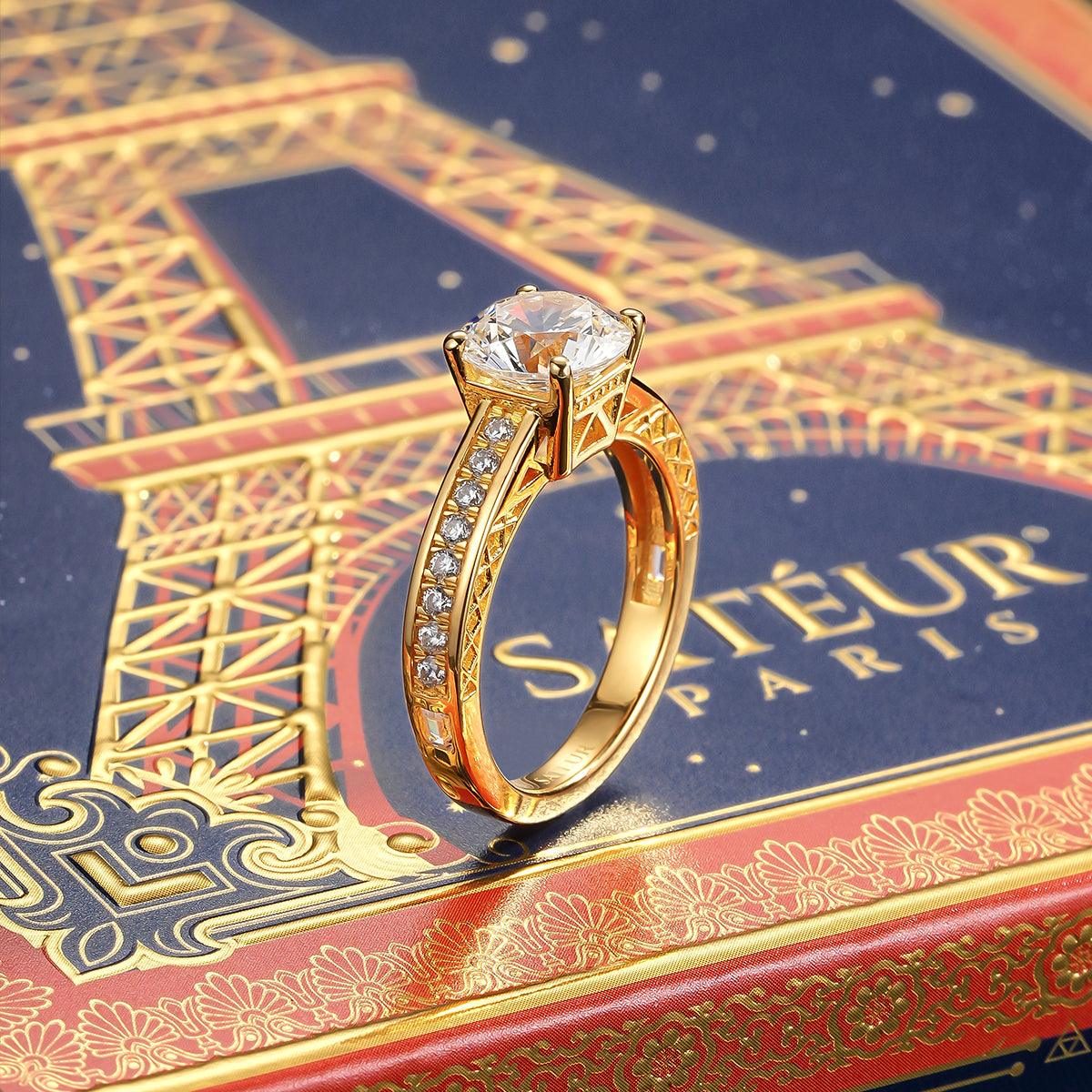
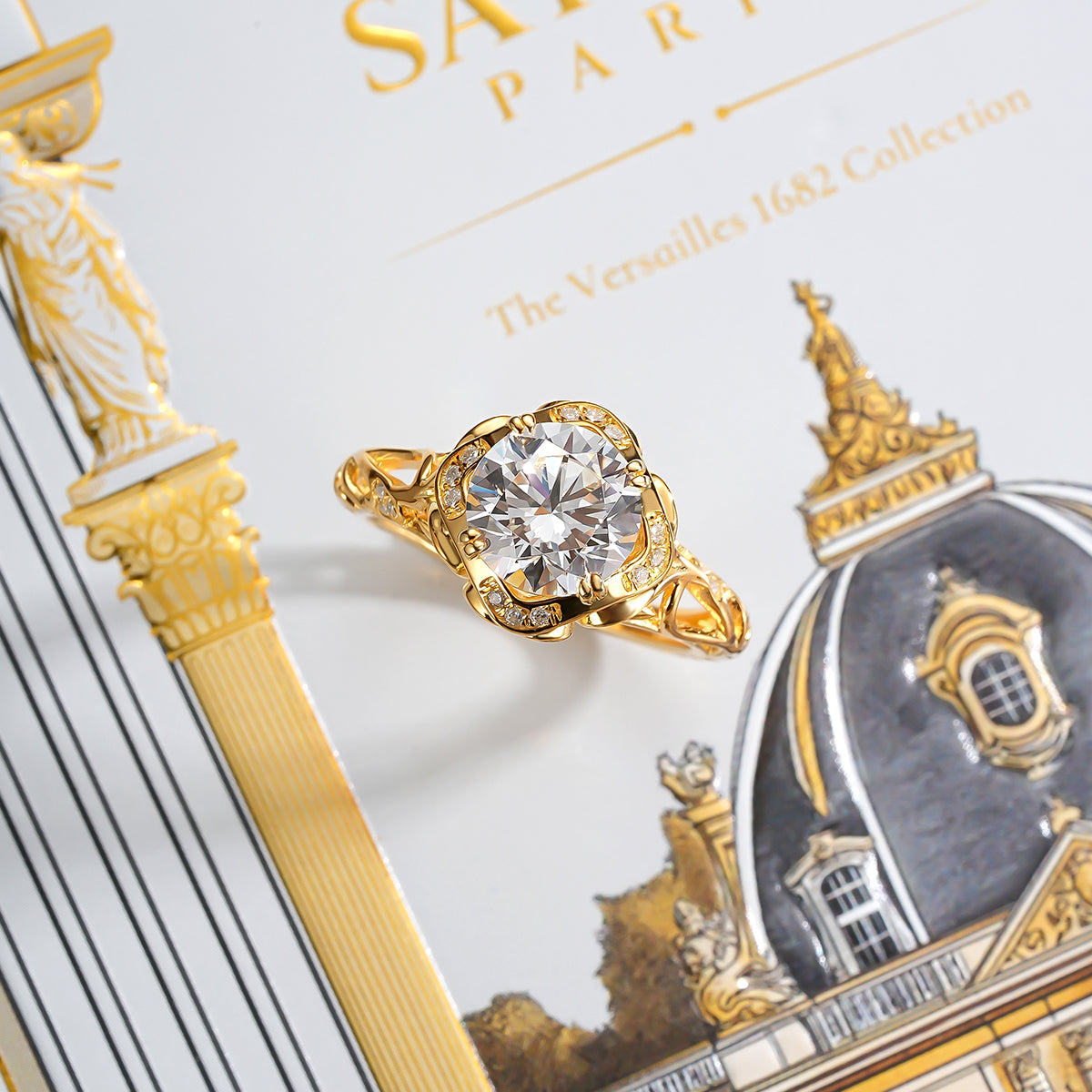
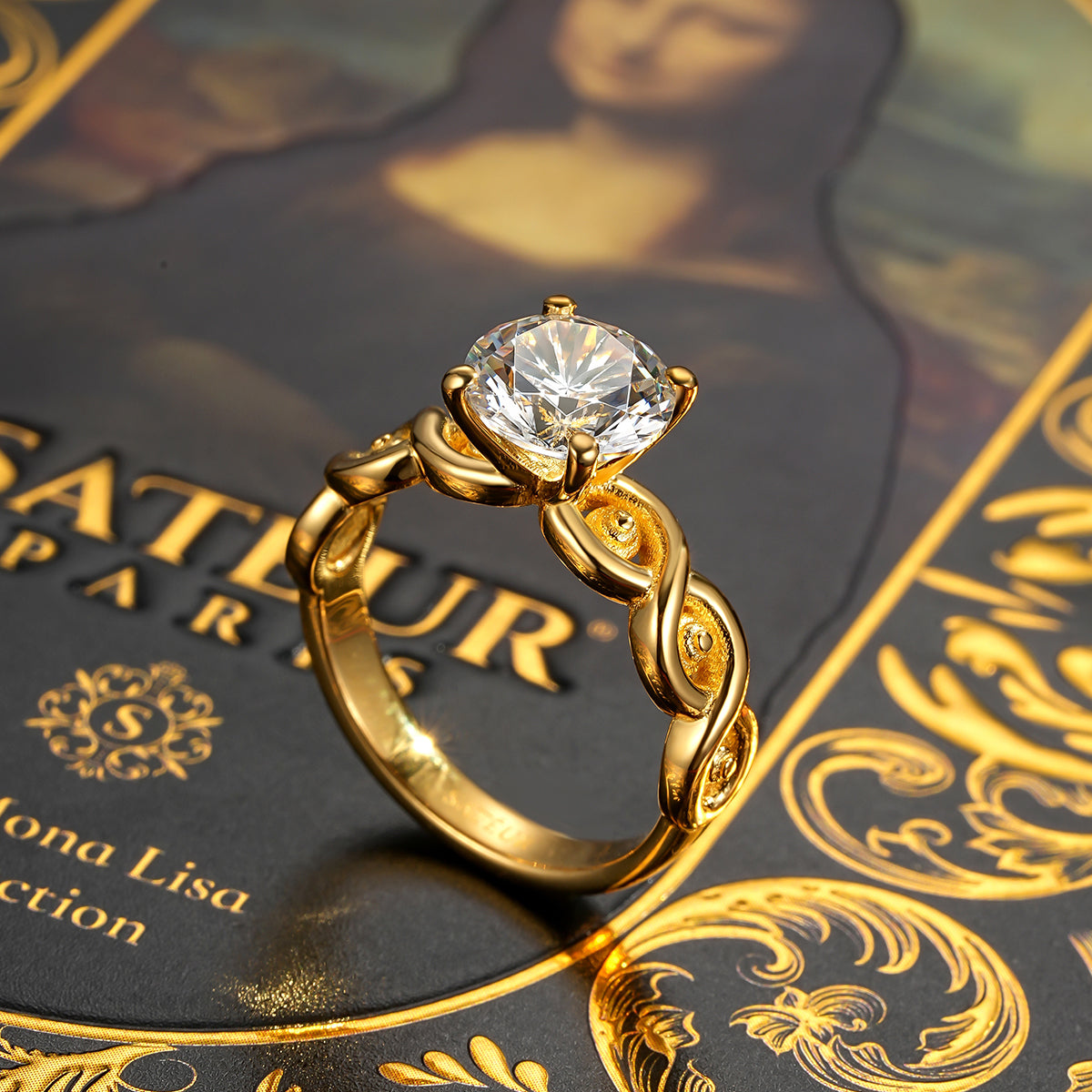

For a ring worn daily, moissanite and cubic zirconia are not interchangeable. Moissanite rates 9.25 on the Mohs hardness scale and retains its optical quality permanently; cubic zirconia rates 8–8.5 and typically shows visible clouding within one to three years of regular wear. That durability gap is the central fact when choosing a ring stone.
Key Takeaways
- Moissanite ranks 9.25 on the Mohs hardness scale — significantly more scratch-resistant than cubic zirconia (8–8.5) for daily ring wear.
- Cubic zirconia typically clouds or scratches within 1–3 years; moissanite maintains optical clarity for decades.
- Moissanite produces approximately 2.4 times the fire of diamond — vivid rainbow sparkle under bright light.
- Both gemstones are lab-created and ethically sourced, with zero mining impact and transparent origin.
- Satéur moissanite rings start from $138, delivering the look of a fine diamond ring at roughly 1% of traditional diamond pricing.
Moissanite vs Cubic Zirconia: Key Differences
Both stones are lab-created diamond alternatives used in rings — but they perform very differently in the settings, settings durability, and day-to-day realities of ring wear.

| Property | Moissanite | Cubic Zirconia |
|---|---|---|
| Mohs hardness | 9.25 | 8–8.5 |
| Refractive index | 2.65–2.69 | 2.15–2.18 |
| Fire (dispersion) | ~2.4× diamond | Below diamond |
| Colour grade | D-E (engineered) | D-E (initial only) |
| Long-term clarity | Permanent | Degrades 1–3 years |
| Ring durability | Lifetime wear | Replacement needed |
Moissanite is a lab-created gemstone of silicon carbide, first identified in 1893 in a meteorite crater. Cubic zirconia is synthesised from zirconium dioxide and has been commercially available since the 1970s. Both read visually as diamond alternatives — but in a ring setting worn every day, their practical differences are substantial.
For a broader overview of both stones across all jewellery types, see our complete guide to moissanite vs cubic zirconia. This article focuses on the ring-specific considerations: durability under daily wear, setting compatibility, and pricing.
What Is Moissanite?
Moissanite is a lab-created gemstone composed of silicon carbide. It is openly disclosed as such — a gemstone in its own right, not a simulant that obscures its identity. Key properties relevant to ring wear:
- Mohs 9.25 — second only to diamond (Mohs 10) among common ring stones
- Refractive index 2.65–2.69 — produces vivid rainbow fire, approximately 2.4 times the dispersion of diamond
- D-E colour grade — engineered to premium diamond colour range, no yellow or brown tint
- Permanent optical stability — the stone does not cloud, scratch, or degrade under normal wear
Modern moissanite is heat-resistant and chemically stable, making it suitable for ring settings that involve prongs, pavé, and bezel work without concern for the stone's durability over time.
What Is Cubic Zirconia?
Cubic zirconia (CZ) is a lab-created gemstone of zirconium dioxide. It is the most widely used diamond simulant globally, prized for its low cost and initial clarity. What matters for ring buyers:
- Mohs 8–8.5 — softer than moissanite; everyday contact with harder surfaces produces fine scratches
- Refractive index 2.15–2.18 — below both diamond (2.42) and moissanite (2.65–2.69)
- Initial D-E clarity — bright and clear when new; this degrades with accumulated surface wear
- Longevity: 1–3 years typical for daily ring wear before visible cloudiness develops
CZ is a sound choice for fashion rings and occasional wear. For an engagement ring or a ring worn every day, the degradation timeline is the primary limitation.
Durability: Mohs Scale Comparison

The Mohs hardness scale measures a gemstone's resistance to surface scratching. For a ring — the most wear-intensive jewellery position — this is the most important practical specification.
Moissanite at Mohs 9.25
Moissanite sits just below diamond on the Mohs scale. In daily ring wear, this means contact with keys, countertops, bags, gym equipment, and cleaning materials will not scratch the stone. The gem that arrives is the gem you wear in twenty years. It requires only basic maintenance — mild soap and warm water — and no professional intervention to maintain its appearance.
Cubic Zirconia at Mohs 8–8.5
At Mohs 8–8.5, CZ is softer than moissanite by a meaningful margin. The fine scratches that accumulate from everyday contact are imperceptible individually — but they compound. Over one to three years of daily wear, they scatter light rather than reflecting it, and the stone turns dull and cloudy. CZ requires repolishing to restore clarity; moissanite does not. For an engagement ring expected to last decades, this is a decisive difference.
Cubic zirconia requires frequent repolishing to restore clarity; moissanite's hardness eliminates routine maintenance for most wearers.
Optical Properties and Sparkle

Both stones are visually bright when new. The differences are in character and longevity.
Moissanite: Vivid Rainbow Fire
Moissanite's high refractive index (2.65–2.69) produces strong overall brilliance and characteristic rainbow fire — the coloured flashes visible under directional or bright light. This fire is more intense and more multi-coloured than diamond's, which returns primarily white light. Under a ceiling light or sunlight, moissanite's sparkle is notably vivid. Whether this is preferred is personal; it is distinct and stable indefinitely.
Cubic Zirconia: Subdued and Degrading
When new, cubic zirconia returns reasonable white brilliance — its RI of 2.15–2.18 is below both diamond and moissanite, but still attractive. Over time, surface scratching reduces optical performance measurably. The stone becomes visibly dull compared to a fresh CZ or to moissanite — a difference readily apparent to the naked eye under most lighting conditions.
Longevity and Wear Over Time
Why the Durability Gap Matters for Rings Specifically
For an engagement ring or a piece with sentimental value worn daily, longevity matters beyond the initial purchase decision.
| Stone | Typical retail (1 carat) | Ring longevity | Maintenance |
|---|---|---|---|
| Diamond (mined) | $4,000–$10,000+ | Permanent | Occasional cleaning |
| Moissanite | $300–$700+ | Permanent | Mild soap + water |
| Cubic zirconia | $5–$50 | 1–3 years (clouding) | Repolishing required |
The economics of CZ shift once replacement cycles are factored in. A $30 CZ stone replaced every two years costs more over a decade than a moissanite stone that requires no replacement. For a ring that carries long-term meaning, the value calculus clearly favours moissanite.
For a deeper comparison including lab diamond, see our guide on moissanite vs diamond vs lab diamond.
Satéur Moissanite: The Value Proposition
Ring Pricing: Moissanite vs CZ vs Diamond
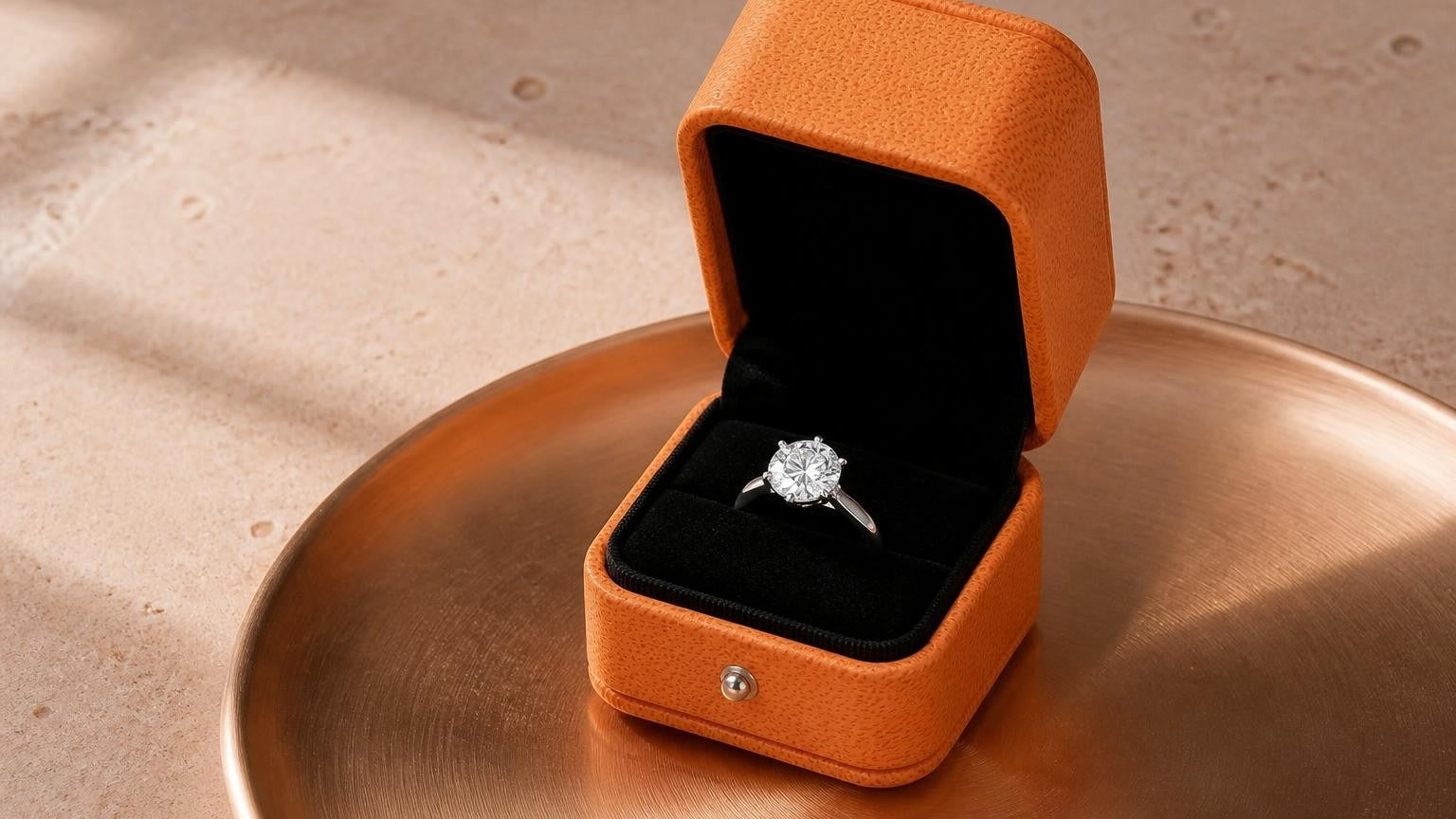
Satéur moissanite rings start from $138 — hand-set in an 18k gold finish, D-E colour grade, Excellent cut. The visual presence of a diamond engagement ring at roughly 1% of the mined diamond price, with the durability of moissanite (Mohs 9.25) for lifetime wear.
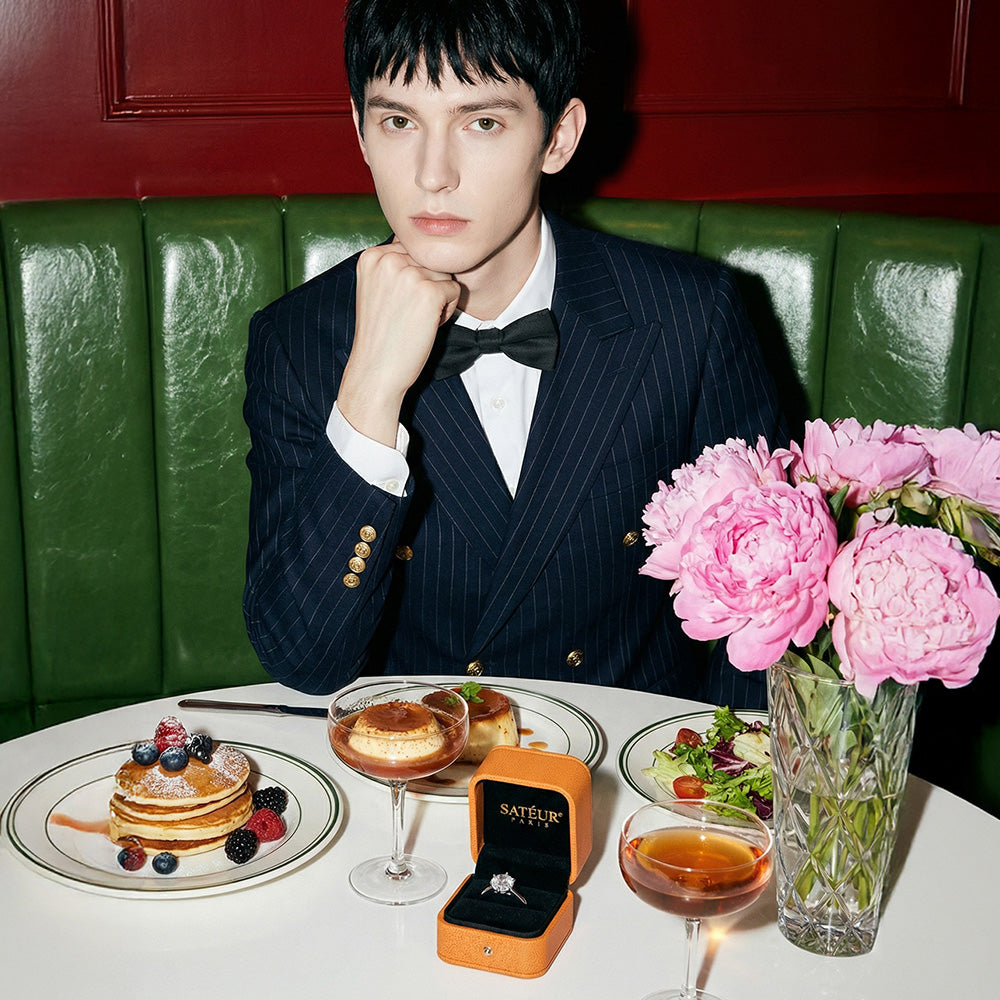
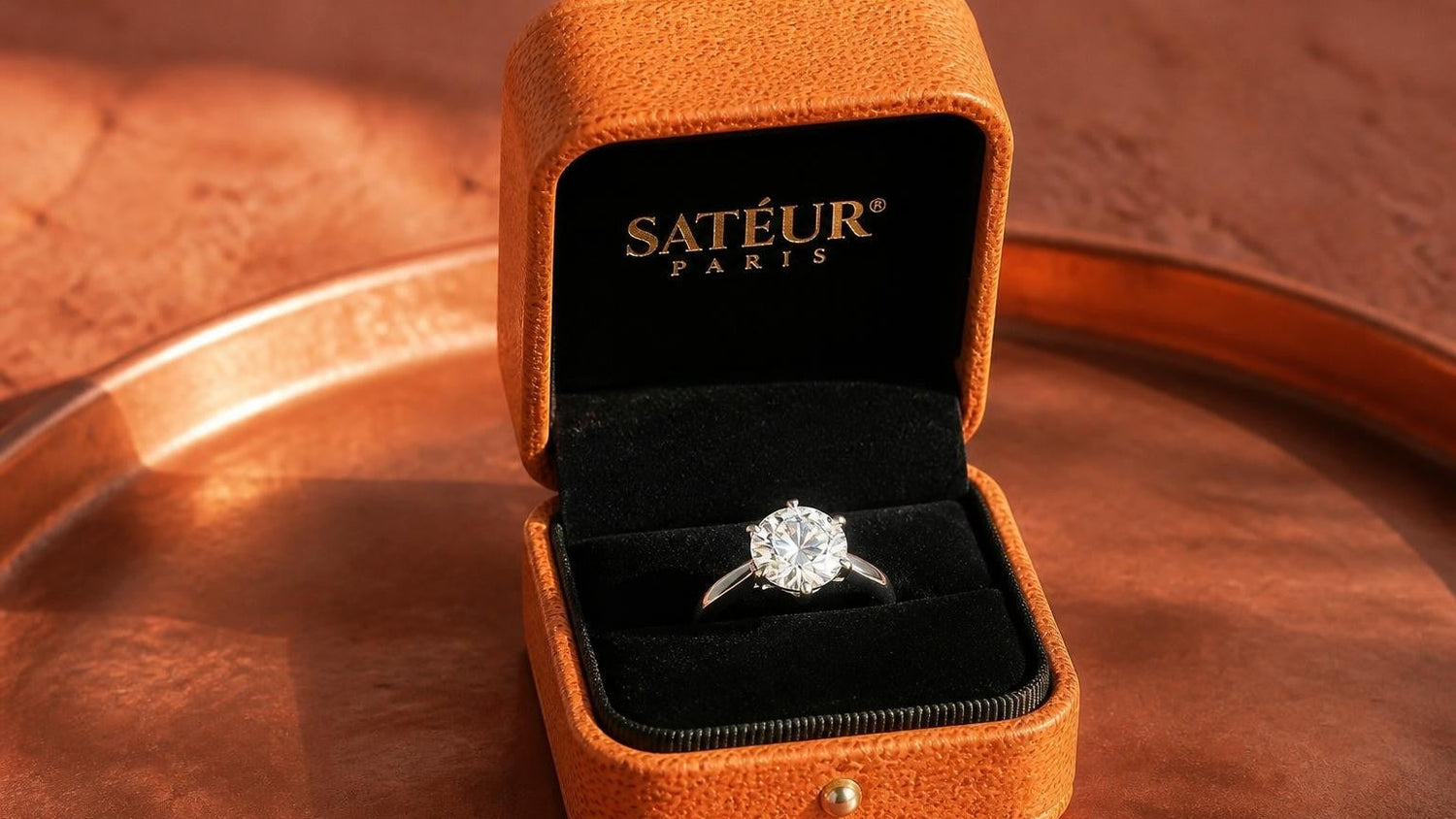
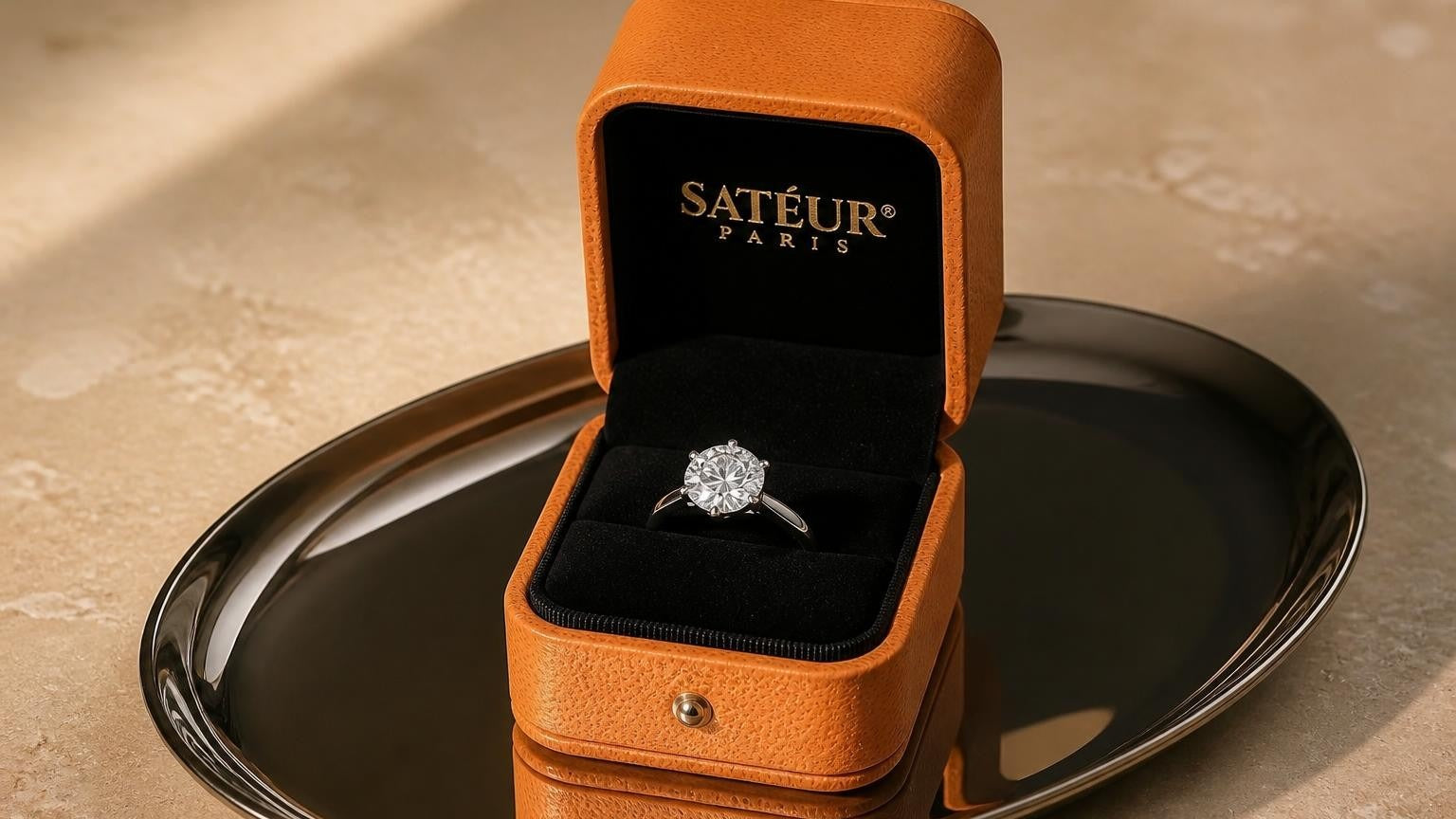
Each ring arrives in the signature Satéur box, with free worldwide delivery and 30-day returns. The stones are openly disclosed as moissanite — lab-created, the same gemstone described throughout this guide.
What You Get
- From $138 — multiple styles, carat weights, and settings
- D-E colour grade — engineered to premium diamond colour range
- Excellent cut — maximum light return and fire from every facet
- 18k gold finish — warm, durable setting
- Mohs 9.25 durability — built for daily ring wear, permanently
- 30-day returns, Lifetime Satéur Care
Browse the full Satéur moissanite rings collection. For a side-by-side view of moissanite alongside diamond, see our moissanite ring vs diamond ring guide.

Satéur Destinée Ring™
The look of a flawless diamond — from $138.
D-E colour · Excellent cut · 18k gold finish
Free worldwide delivery. 30-day returns. Lifetime Satéur Care.
Shop the Destinée RingFree worldwide shipping · 30-day returns · Lifetime Satéur Care
FAQ: Moissanite and Cubic Zirconia
What is the main difference between moissanite and cubic zirconia?
The key differences are durability and longevity in ring wear. Moissanite rates 9.25 on the Mohs hardness scale; cubic zirconia rates 8–8.5. Moissanite retains its optical quality permanently — no clouding, no degradation. CZ shows visible surface scratching and cloudiness within one to three years of daily ring wear. Optically, moissanite produces vivid rainbow fire (RI 2.65–2.69); CZ returns more subdued brilliance (RI 2.15–2.18).
How long does cubic zirconia last compared to moissanite?
Cubic zirconia typically shows visible surface scratching and cloudiness within one to three years of daily ring wear. Moissanite at Mohs 9.25 resists everyday scratching and retains its original optical character permanently — a substantial practical difference for an engagement ring or a piece worn every day.
Does moissanite stay clear over time?
Yes. Moissanite is a stable lab-created gemstone of silicon carbide with Mohs hardness 9.25. It does not cloud, yellow, or lose its optical properties under normal wear conditions. The stone looks the same after ten years as it did when first set.
Will a moissanite ring cloud or scratch easily?
No. At Mohs 9.25, moissanite resists scratching from everyday contact — keys, countertops, fabrics, general household surfaces — and does not cloud over time. It is among the most durable ring stones available, requiring only occasional cleaning with mild soap and warm water.
What makes moissanite a better choice for engagement rings?
Three factors: durability (Mohs 9.25 — no scratching in daily wear), stability (no clouding or optical degradation over decades), and transparency (openly disclosed as a lab-created gemstone). For a ring worn every day with long-term sentimental value, moissanite's permanent optical performance is a practical advantage over CZ.
How much does a moissanite ring cost at Satéur?
Satéur moissanite rings start from $138 — hand-set in an 18k gold finish, D-E colour grade, Excellent cut. Multiple styles, carat weights, and settings are available. Free worldwide delivery and 30-day returns are included.
















Leave a comment
This site is protected by hCaptcha and the hCaptcha Privacy Policy and Terms of Service apply.