

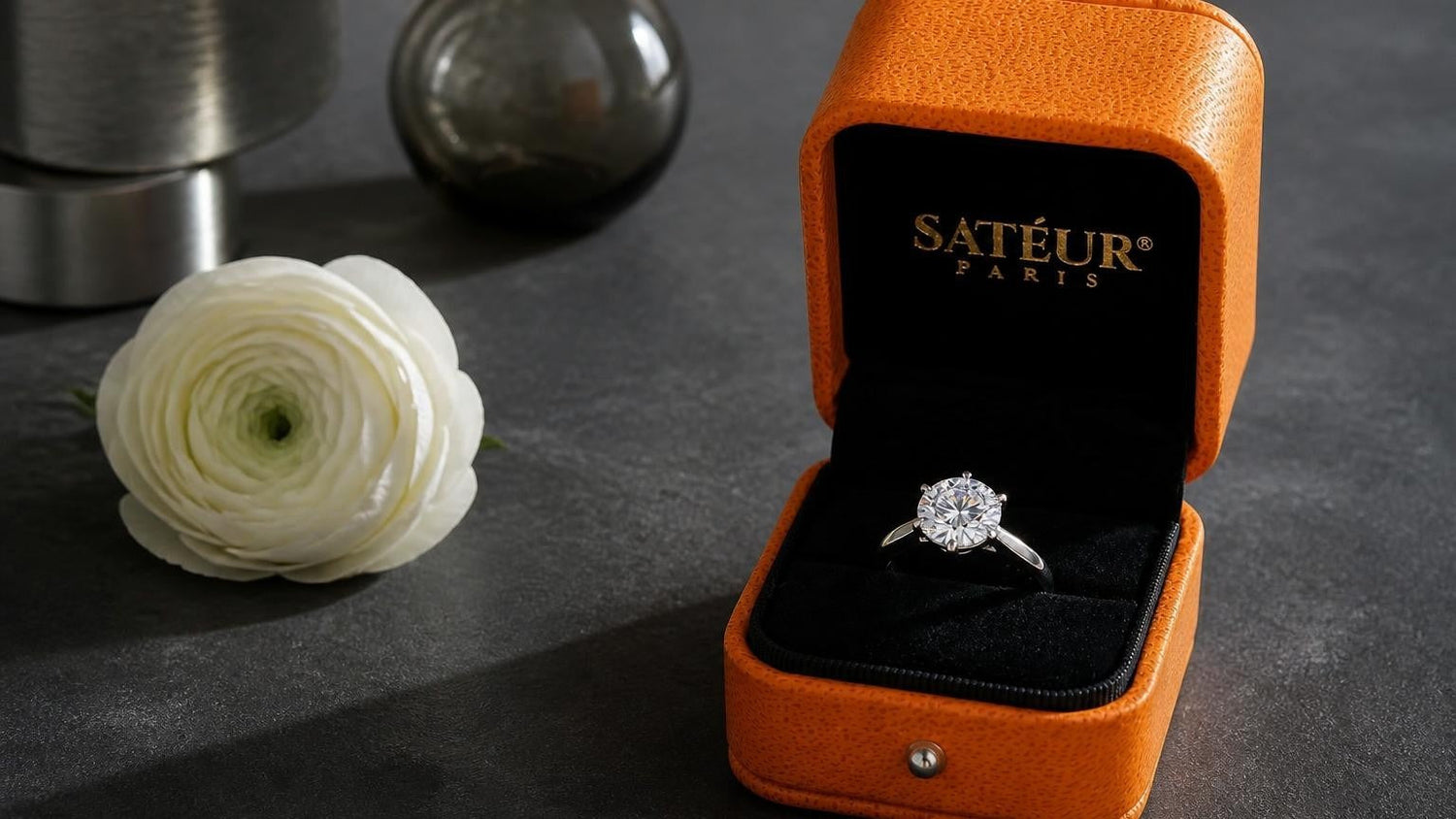
A diamond alternative gives you the brilliance and fire of a fine diamond — without the diamond price. The main options (moissanite, lab-grown diamonds, Satéur Gems®, white sapphire and cubic zirconia) each sit at a different point on the price–durability–sparkle curve, and to the naked eye the finest of them are indistinguishable from a mined diamond across a dinner table. This guide compares every alternative — what each one is, how they hold up, which suits an engagement ring, and how to tell a quality simulant from a cheap one.
Key Takeaways
- A diamond alternative gives you the brilliance and fire of a fine diamond for a fraction of the price.
- The main options — moissanite, lab-grown diamond, Satéur Gems®, white sapphire, cubic zirconia — each sit at a different point on the price–durability–sparkle curve.
- To the naked eye, across a dinner table, the finest simulants are indistinguishable from a mined diamond.
- Moissanite (Mohs 9.25) and Satéur Gems® hold up for life and never cloud; cubic zirconia clouds within 1–2 years.
- Satéur Gems® is a trademarked diamond simulant — the look of a flawless, colourless diamond for about 1% of the price.
- For an engagement ring worn daily, lasting sparkle matters most — which rules out cheap cubic zirconia.
What Is a Diamond Alternative?
A diamond alternative is any stone worn in place of a mined diamond. There are two families. Lab-grown diamonds are chemically diamond — simply grown rather than mined. Diamond simulants are a different material chosen for the diamond look: moissanite, cubic zirconia, white sapphire, and Satéur Gems® (our trademarked simulant). The terms you'll see — "simulated diamond," "fake diamond," "diamond simulant" — all mean the same thing: a stone that delivers the diamond look at a fraction of the price. None of them is "fake" in any meaningful sense to the eye; they're simply a smarter way to buy the look.

Explore in depth:
The Main Diamond Alternatives, Compared
Which alternative is best? It depends on what you weigh most — sparkle, durability, or price. Here's how the main options stack up, then the short version of each.
| Stone | Hardness (Mohs) | Fire (RI) | Price vs diamond | Holds up? |
|---|---|---|---|---|
| Satéur Gems® | ~8.8–9.25 | High | ~1% | Lifetime, won't cloud |
| Moissanite | 9.25 | 2.65 — most fire | ~1% | Lifetime |
| Lab-grown diamond | 10 | 2.42 | ~30–50% | Lifetime |
| White sapphire | 9 | 1.77 — low fire | Low | Lifetime, can dull |
| Cubic zirconia | 8.5 | 2.16 | <1% | Clouds in 1–2 yrs |
| Mined diamond | 10 | 2.42 | 100% | Lifetime |

Explore in depth:
Diamond-Alternative Engagement Rings
What should you look for in a non-diamond engagement ring? Because it's worn every day and seen up close, the two things that matter most are lasting sparkle and durability. That quietly rules out cubic zirconia — it clouds within a year or two — and makes moissanite or Satéur Gems® the value sweet spot: the diamond look that stays bright for life, set in real 18K gold finishing. White sapphire is durable but noticeably less fiery; lab-grown diamond is excellent but costs far more. Whatever the stone, choose a setting that protects it and a metal that flatters the brilliance.

Explore in depth:
Real vs Fake: How to Tell Them Apart
Can anyone tell? Here's the honest answer: to the naked eye, across a table, a fine simulant like Satéur Gems® or moissanite reads exactly like a diamond — that's the entire point of choosing one. The differences are physical, not visible: hardness, how the stone bends light into rainbow fire, and weight. Where cheap simulants give themselves away is over time — low-grade cubic zirconia clouds, dulls and scratches within a year or two. A quality stone stays bright and sharp for life. So the real "real vs fake" question isn't whether anyone can see it (they can't) — it's whether the stone you buy will still look brilliant in ten years.

Explore in depth:
Why Satéur Gems® Is the Smartest Alternative
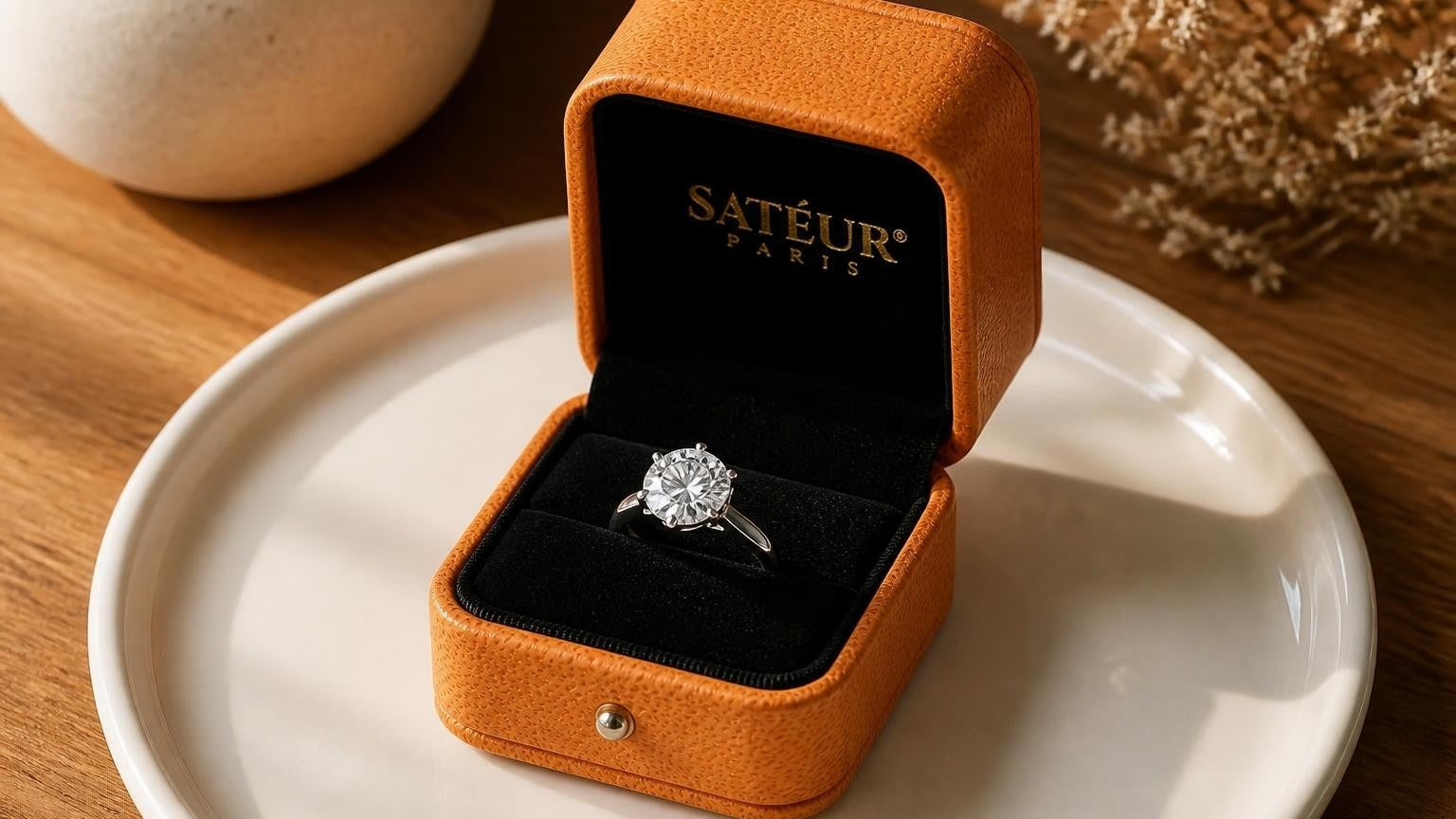
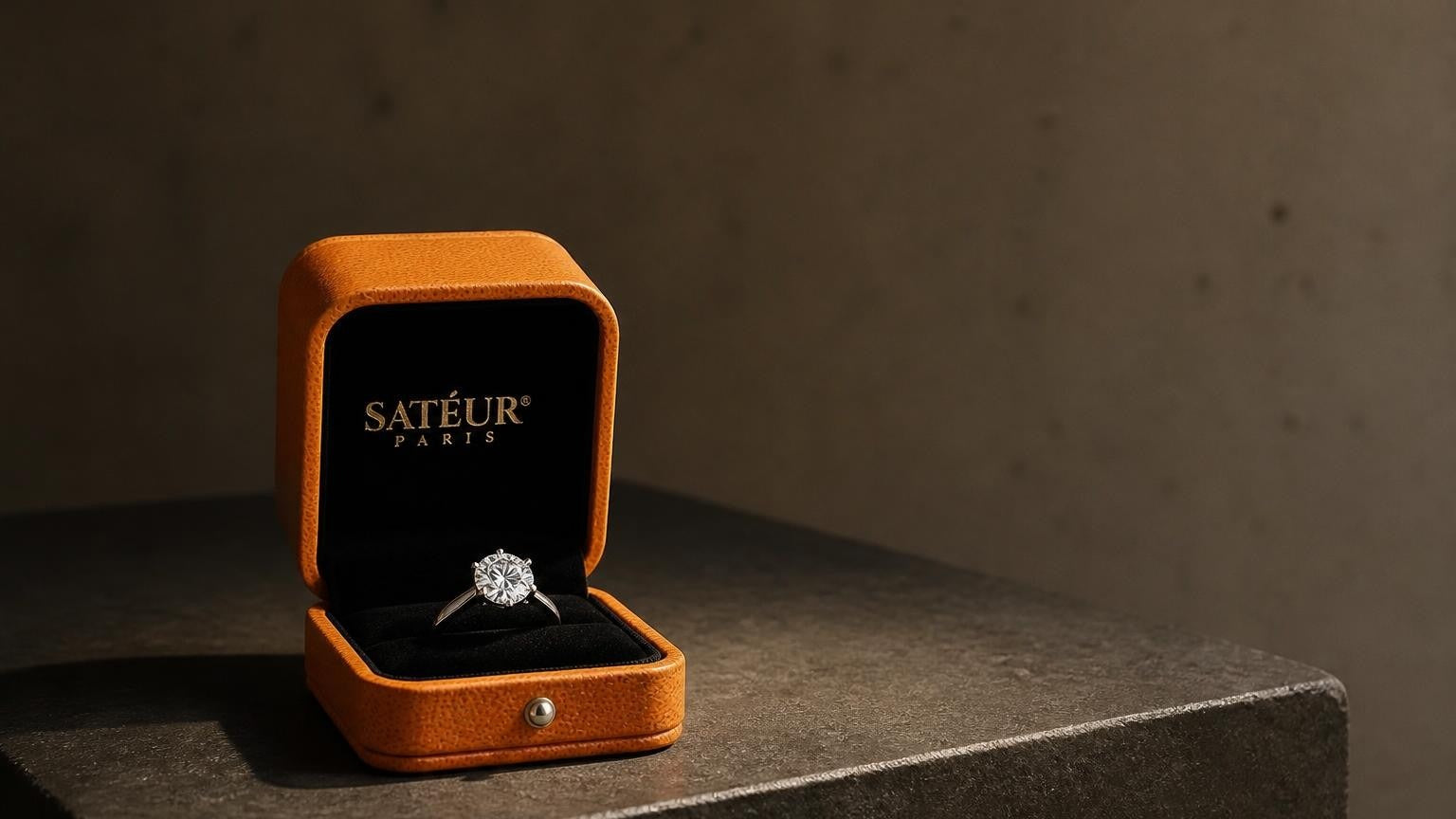
Satéur Gems® is our trademarked diamond simulant, engineered to deliver the look of a flawless, colourless diamond for about 1% of the price. Colour D–E, Excellent cut, with the fire and brilliance that reads as a fine diamond to the naked eye — set in 18K gold finishing and built to stay that way for life. Compare to a $10,000 mined diamond. It's the alternative we'd choose ourselves, and the one 100,000+ couples across 150+ countries already wear.


Satéur Destinée Ring™
The look of a flawless diamond — for about 1% of the price.
Compare to a $10,000 mined diamond
Joined by 100,000+ couples across 150+ countries.
Discover Satéur RingsFree worldwide shipping · 30-day returns · Lifetime Satéur Care
Frequently Asked Questions
What is the best diamond alternative?
For an engagement ring, moissanite and Satéur Gems® offer the best balance — the diamond look and lifetime durability for about 1% of the price. Lab-grown diamonds cost more but are chemically diamond; cubic zirconia is cheapest but clouds over time.
What is a simulated diamond?
A simulated diamond (or diamond simulant) is a stone that looks like a diamond but is a different material — moissanite, cubic zirconia, white sapphire, or Satéur Gems®. It's chosen for the diamond look at a fraction of the price.
Is cubic zirconia the same as a fake diamond?
Cubic zirconia is one kind of diamond simulant — "fake diamond" is just the casual term. It's the cheapest option but softer (Mohs 8.5) and tends to cloud within a year or two, unlike moissanite or Satéur Gems®.
Do diamond alternatives look real?
The finest ones do — to the naked eye, across a dinner table, a quality moissanite or Satéur Gems® is indistinguishable from a mined diamond. Cheaper simulants look duller and cloud over time.
Are diamond alternatives worth it?
Yes — you get the look of a flawless diamond for roughly 1% of the price, in real 18K gold finishing. For most people the visible result is identical and the saving is enormous.
Which diamond alternative lasts the longest?
Moissanite (Mohs 9.25), Satéur Gems®, and lab-grown diamonds (Mohs 10) all last a lifetime without clouding. White sapphire is durable but can dull; cubic zirconia clouds soonest.














コメントを残す
このサイトはhCaptchaによって保護されており、hCaptchaプライバシーポリシーおよび利用規約が適用されます。